Vienna Furniture Museum: A Hidden Gem Worth visiting
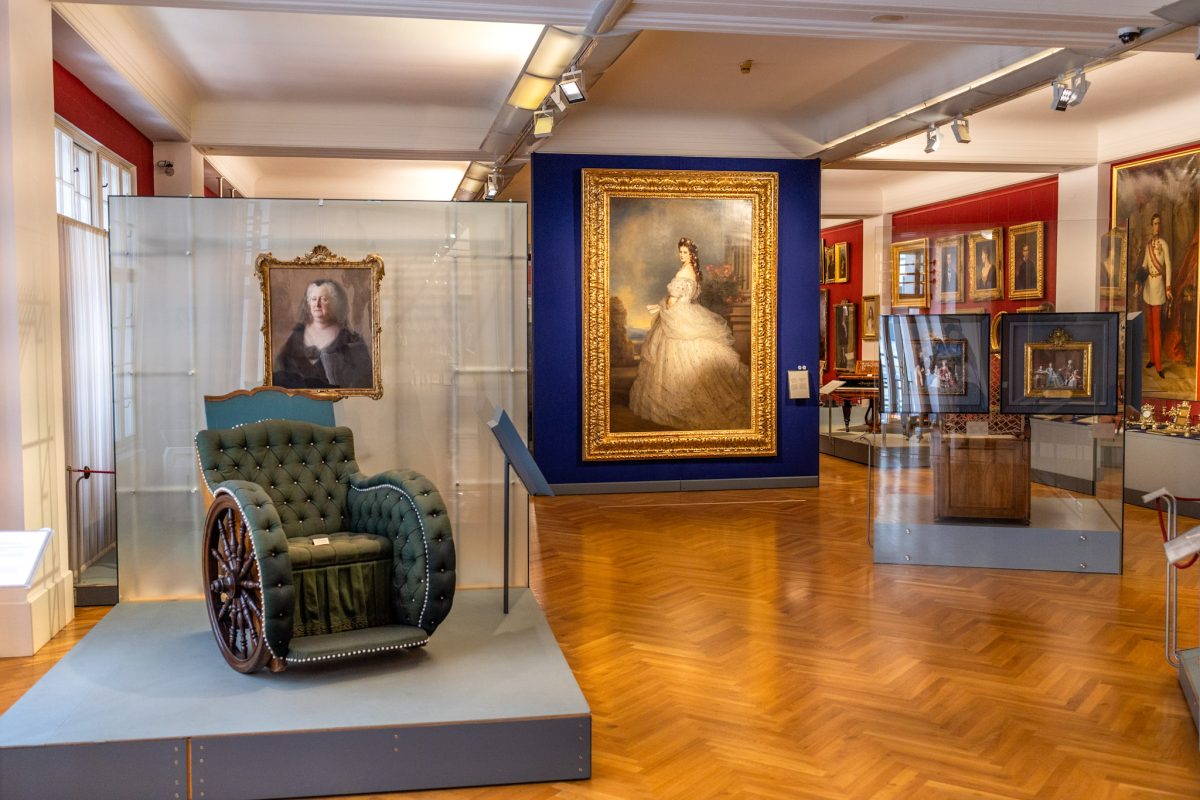
The Vienna Furniture Museum is a true hidden gem among Vienna’s museums, and yes, I know that phrase is often overused, but here it really fits. Tucked away in Andreasgasse, a small side street off Mariahilfer Straße (Vienna’s biggest shopping street), you’ll find the entrance to a “treasure chamber” you wouldn’t expect here.
In this post, I’ll take you along on my tour of the Furniture Museum, tell you what awaits you inside, and as always share a few useful tips for your visit. At the end of the article, you’ll find all the important information, such as ticket prices, opening hours and more. And if you follow my recommendation or if you’ve already been, I’d love to hear in the comments what you thought of it!
The Furniture Museum – so much more than a collection of furniture
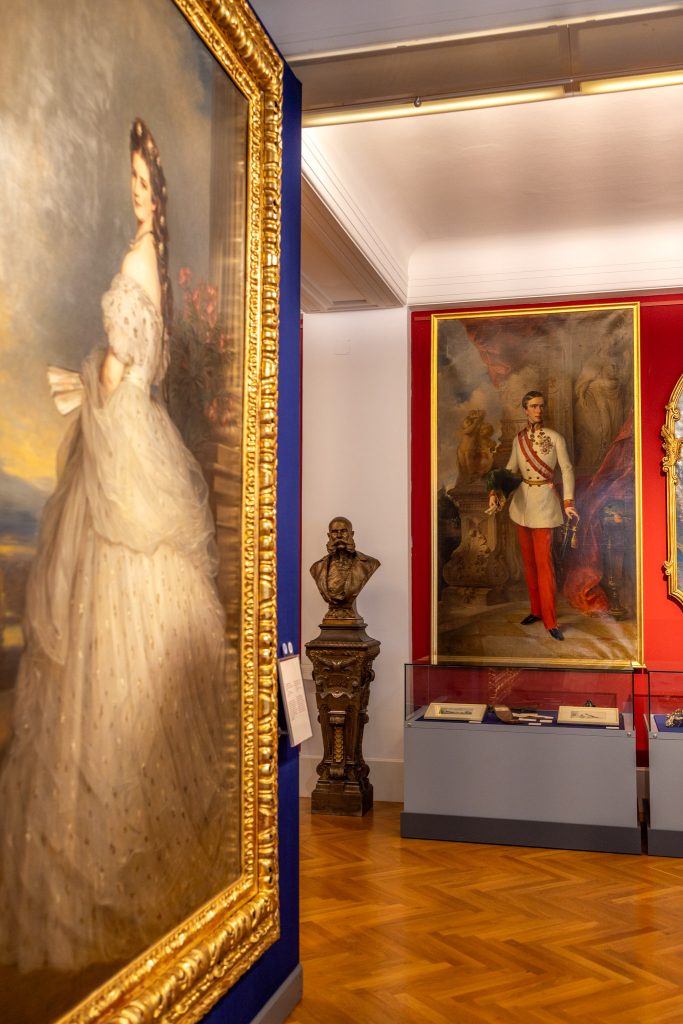
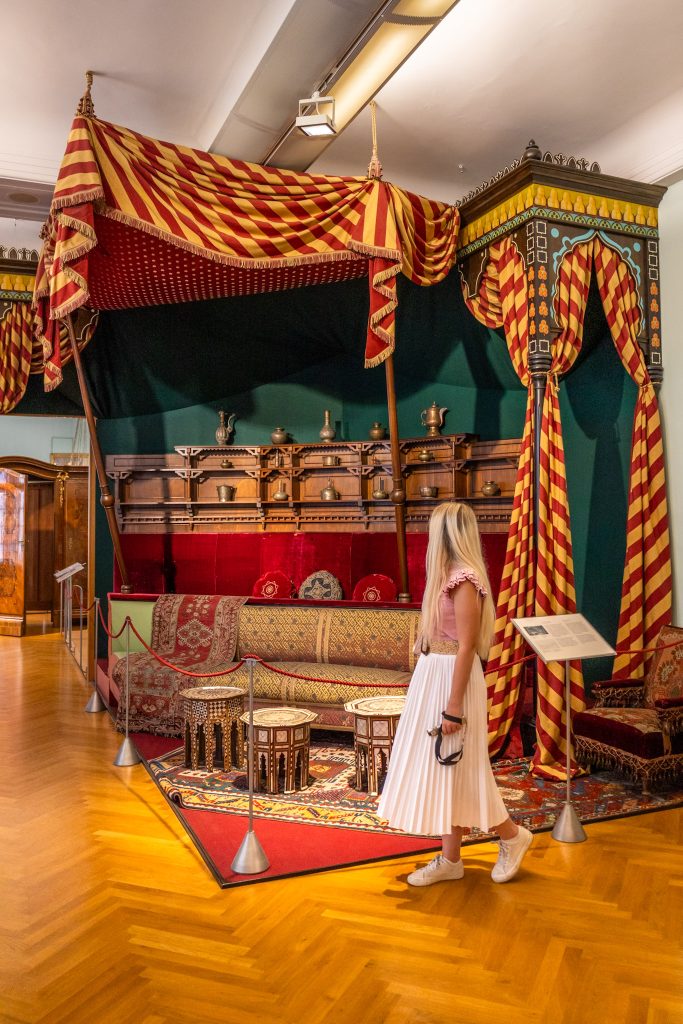
Today the Furniture Museum Vienna houses the incredible number of more than 165,000 objects, making it one of the largest and most important museums of its kind worldwide. Of course, not everything is on display, but around 6,000 of the most beautiful and important pieces can be discovered here across three floors.
The history of the museum is fascinating as well: the so-called Hofmobilieninspektion was founded by Maria Theresa. Its job was to repair and store the imperial inventory and, above all, to transport it from palace to palace whenever needed. The Habsburgs’ summer residences were originally unfurnished. So if the family wanted to spend the summer for example at Schloss Laxenburg, everything had to be moved there first: furniture, dishes, chandeliers, absolutely everything.
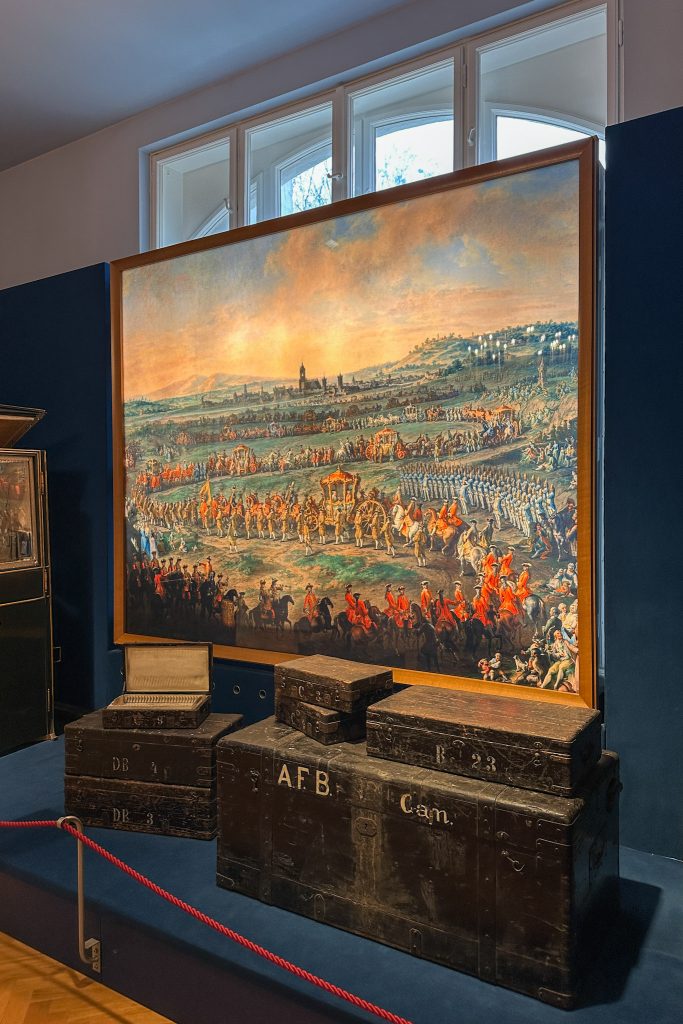
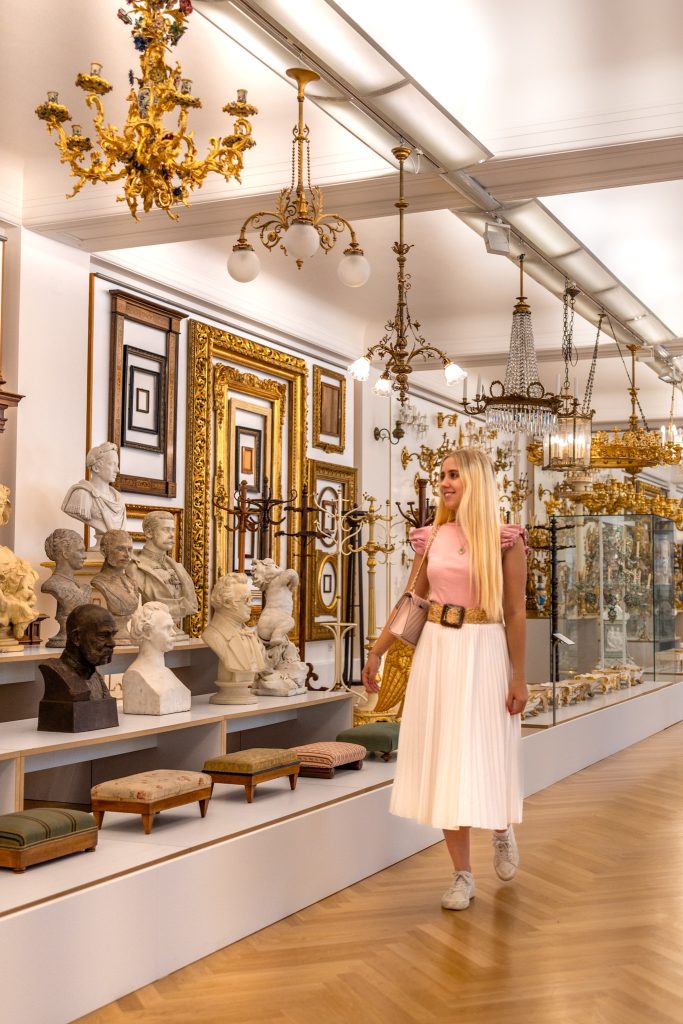
Later this became the Hofmobiliendepot, a storage place for the entire furniture collection of the Habsburgs. Today it functions both as a museum and a depot. And here’s the exciting part: the furniture is still being used. Ministries, the Presidential Chancellery and Austrian embassies abroad are still furnished with pieces from the depot, and even state dinners are hosted with chairs and tables from this collection.
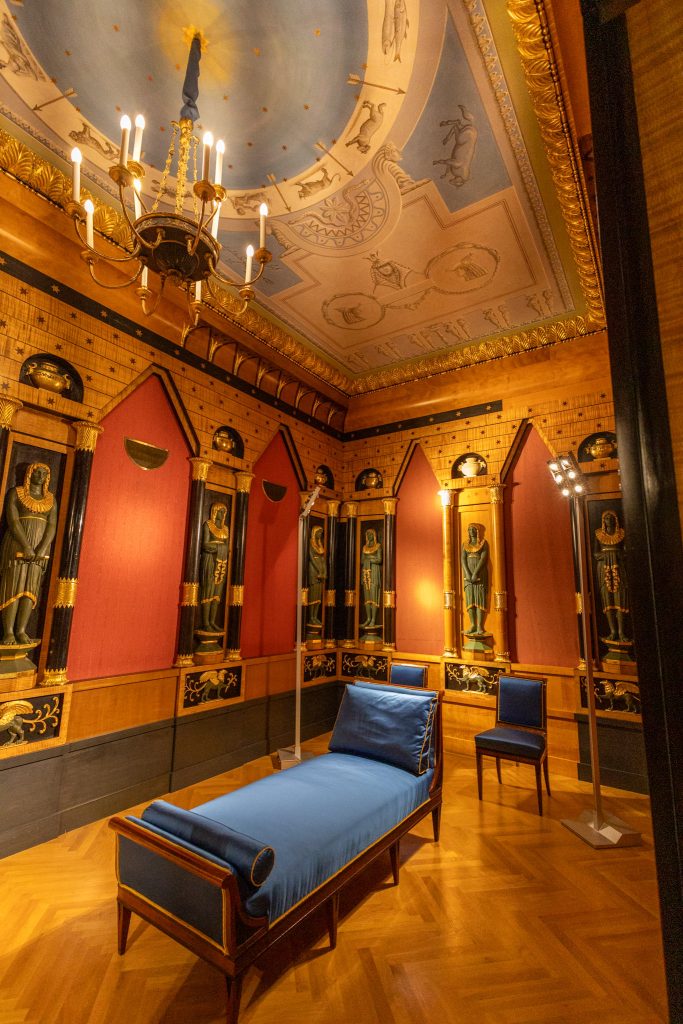
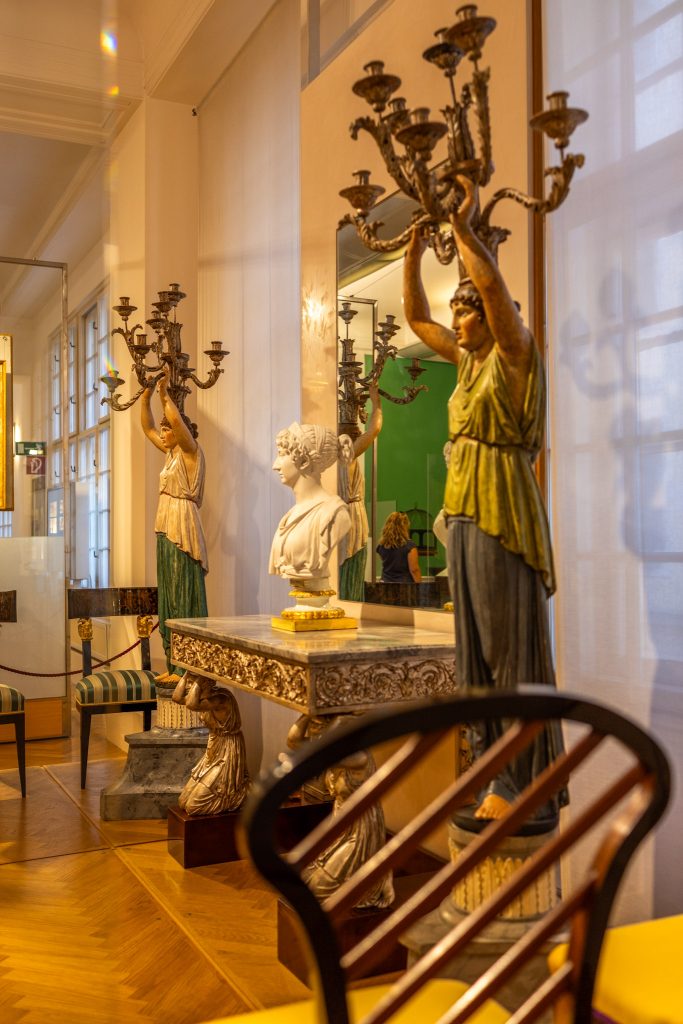
What fascinated me most during the tour: These pieces of furniture are not just exhibits, they tell stories. You can see how design, society and culture have changed over the centuries. And quite often, I found myself wondering what these pieces of furniture must have “experienced”: joyful or tragic moments, but also historically significant decisions.
With the audio guide through the Furniture Museum
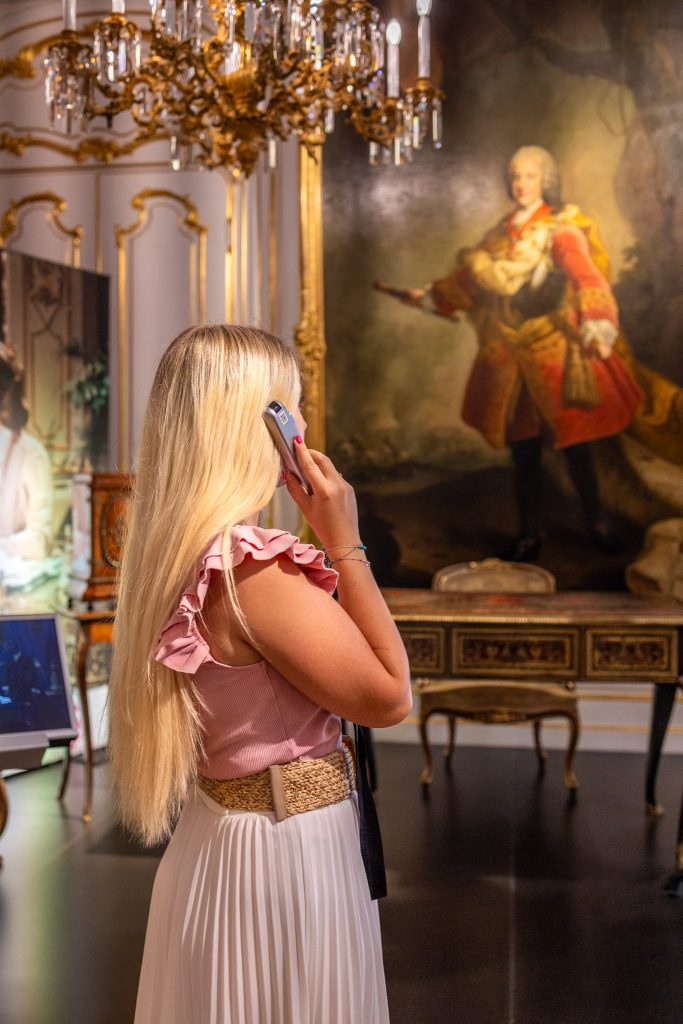
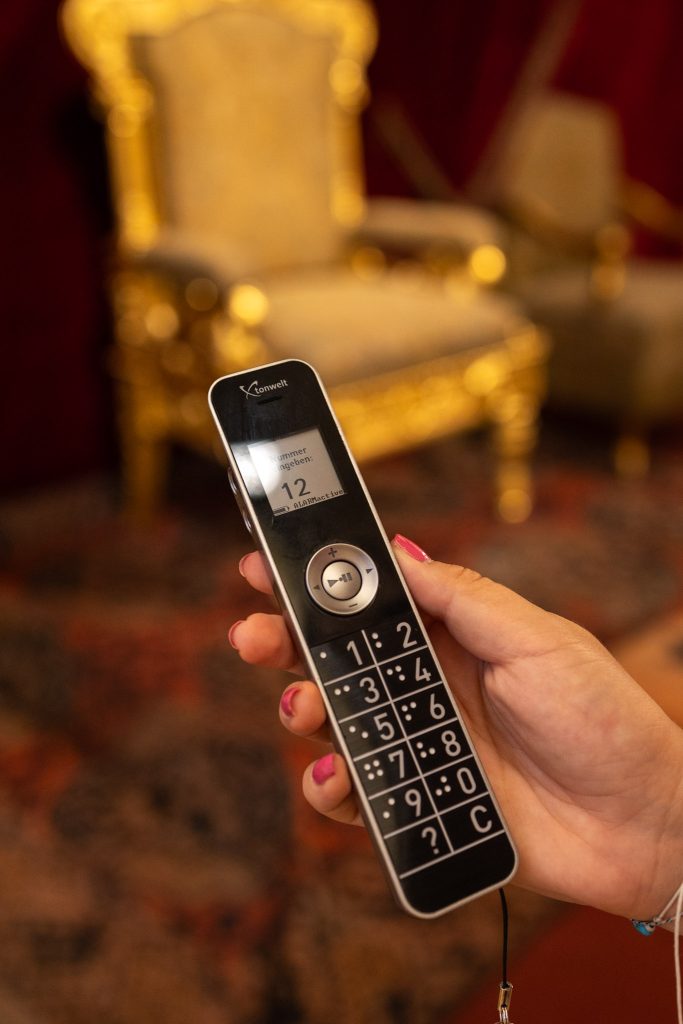
I definitely recommend taking the audio guide with you on your tour! It’s included in your ticket and available in nine languages. Of course, you’ll find plenty of information on display panels throughout the museum, but I found it much more enjoyable to just let the audio guide lead me and listen along.
There are two audio guide tours with different focuses:
- a general tour through the permanent collection (two-digit numbers), duration about 70 minutes
- and a “Sissi in Film” tour (three-digit numbers), duration about 35 minutes
The numbers are shown on the signs: red for the general tour, white with the Sissi lettering for the “Sissi in Film” tour. You can switch between the two tours at any time.
What I especially like is that the audio guide gives you really interesting background information along the way. Did you know, for example, that every male descendant of the imperial family had to learn a craft? Franz Joseph was trained as a carpenter, Emperor Franz as a gardener. Or that the desk “Franz Joseph” works at in the Sissi movies wasn’t actually his desk at all. It was still significant, as it was one of the four tables on which the Austrian State Treaty was signed.
Tip: You can also download the audio guide in advance and listen to it conveniently on your phone.
The Museum Garden
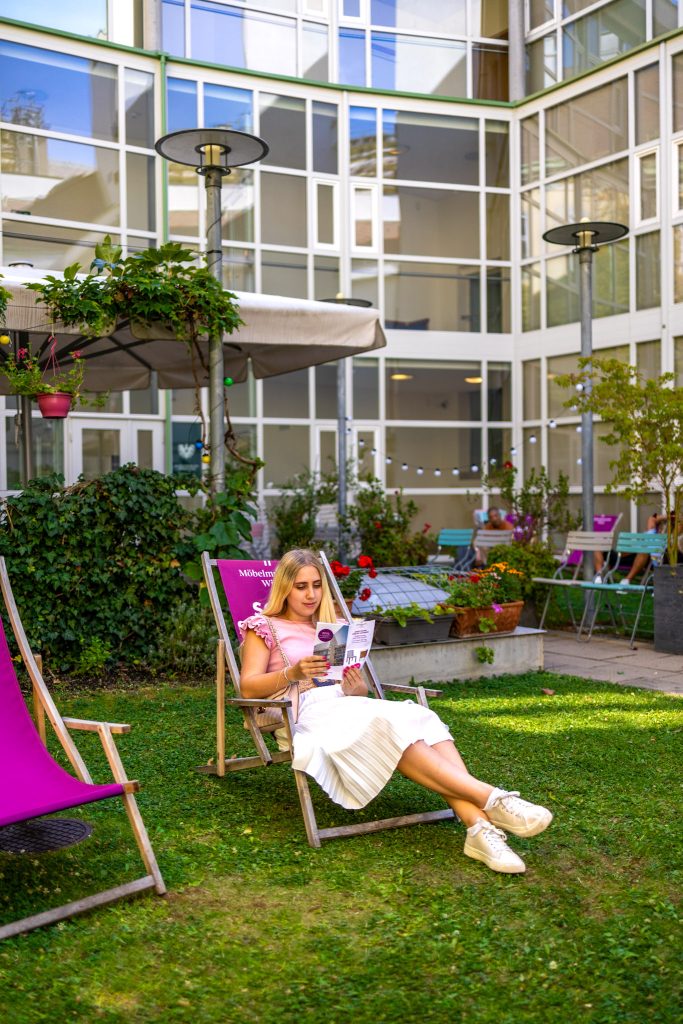
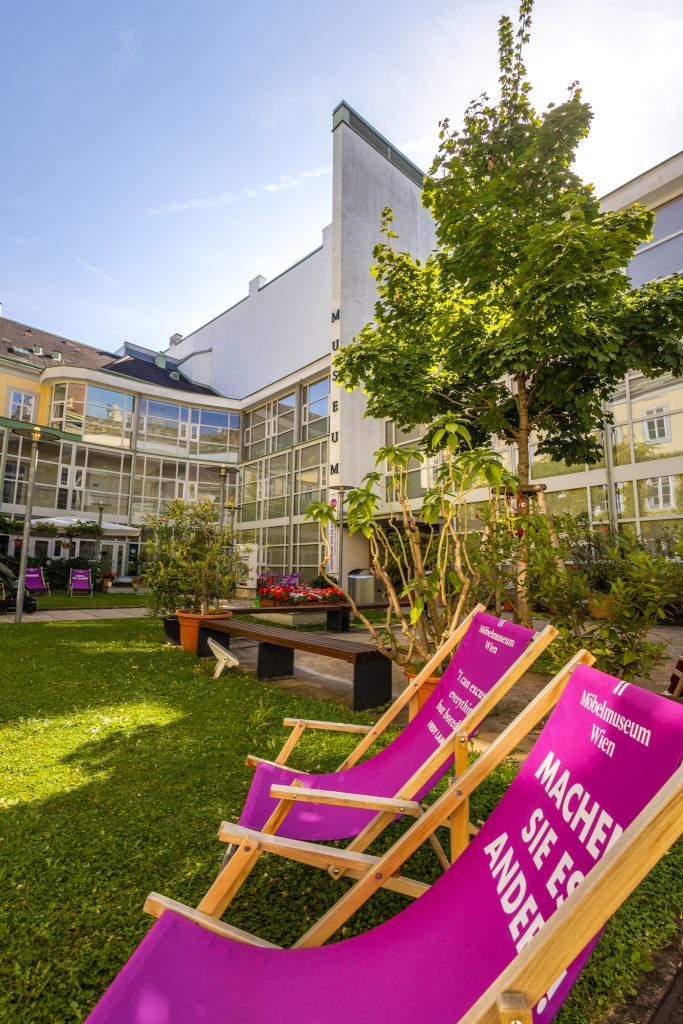
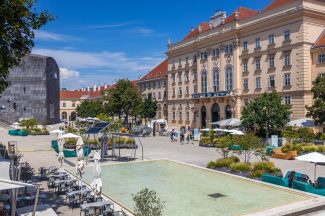
The first thing you’ll notice when you step into the Furniture Museum from Andreasgasse is the beautiful courtyard. There are potted plants everywhere, ivy climbing the walls and cozy deck chairs and seating areas. It feels like a little oasis, just a few steps away from the often noisy Mariahilfer Straße.
Tip: In summer, the garden also hosts wonderful events: from open-air film nights to Pilates sessions and even tango evenings, where you can try your first dance steps yourself.
A tour through the collections
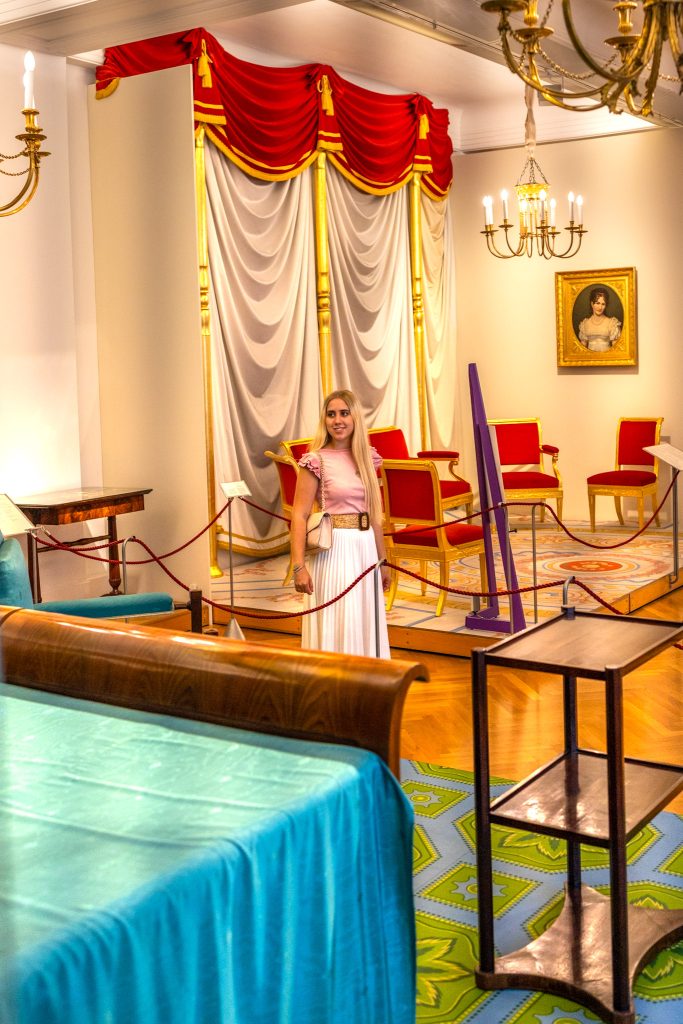
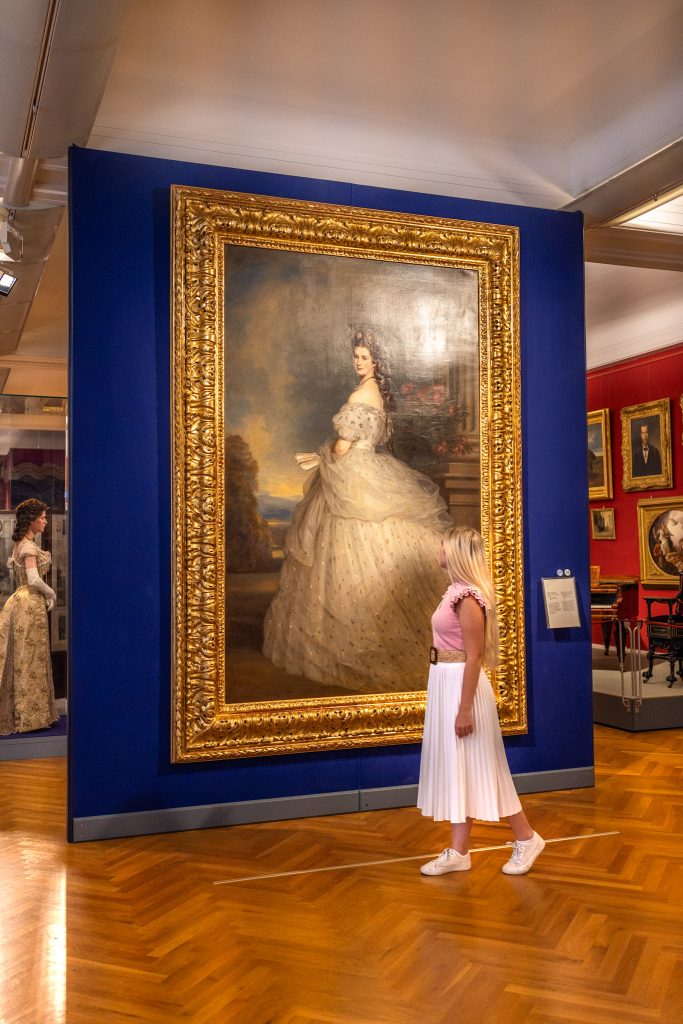
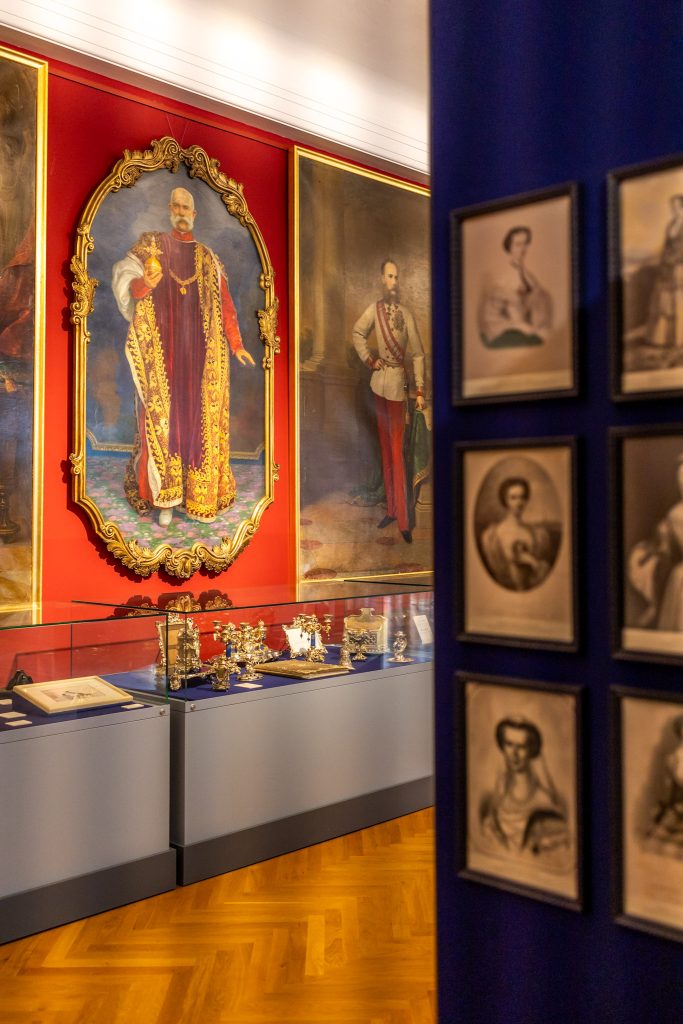
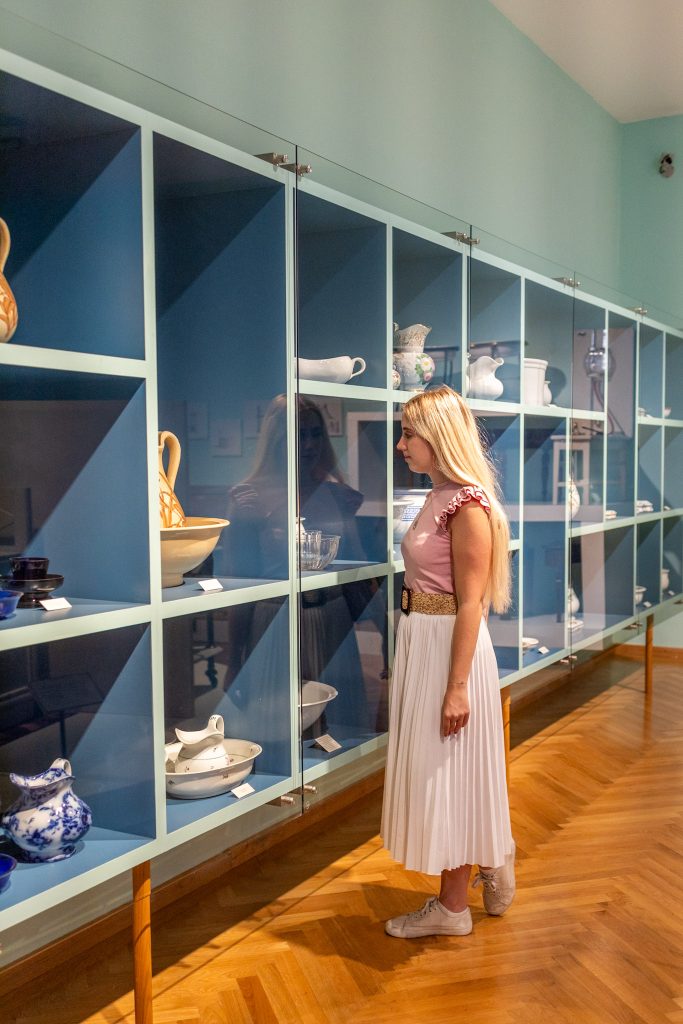
From Baroque and Rococo to the 20th and 21st century, the collections of the Furniture Museum are not only, as already mentioned, huge, but also wonderfully diverse. Of course, I can only show you a few of my personal highlights here and give you a little overview. The rest you should definitely discover for yourself!
Baroque, Rococo and Classicism
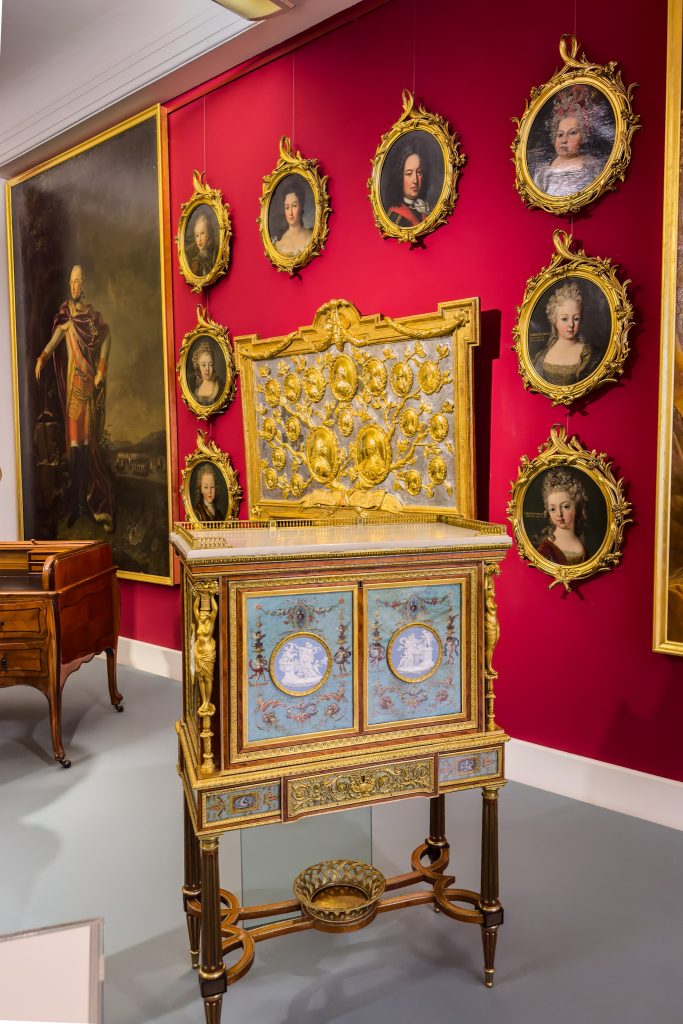
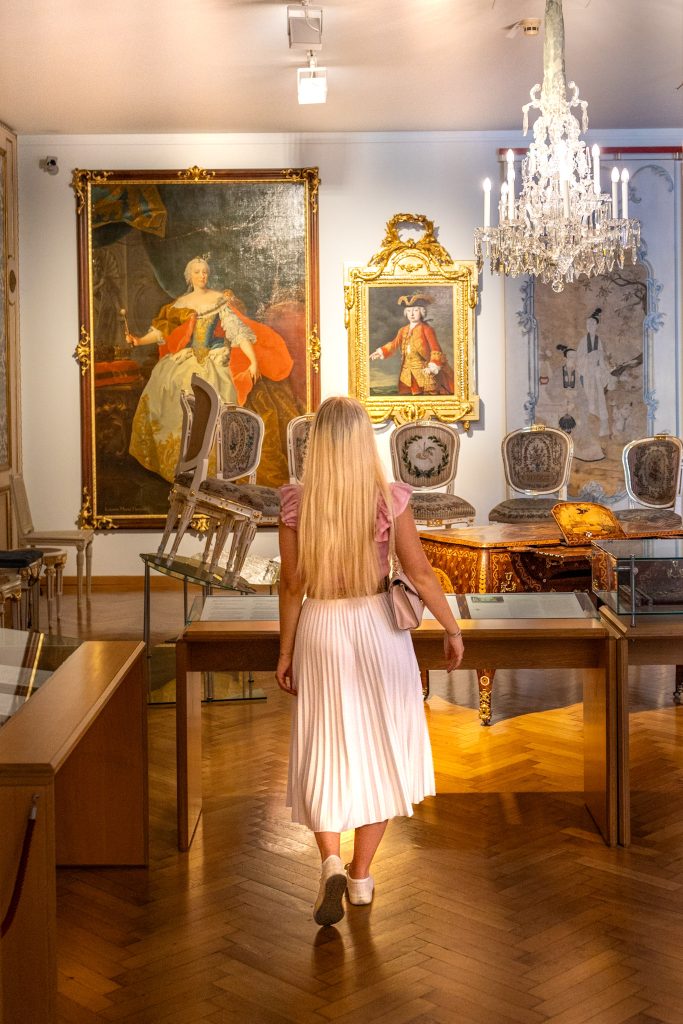
Here you’ll get an impression of imperial interiors in all their opulence. Among the objects on display are pieces belonging to Maria Theresa and her time, as well as Prince Eugene. I especially loved Maria Theresa’s writing desk, the embroidered chairs made by her and her daughters, and the secretaire once owned by Marie Antoinette is a true masterpiece.
Biedermeier and Empire
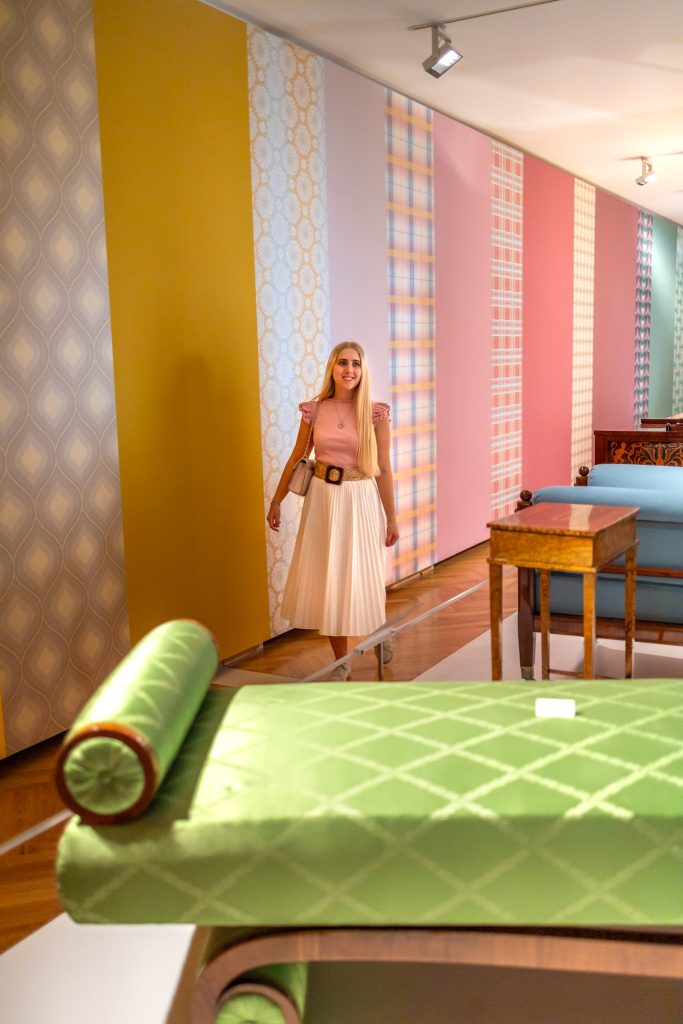
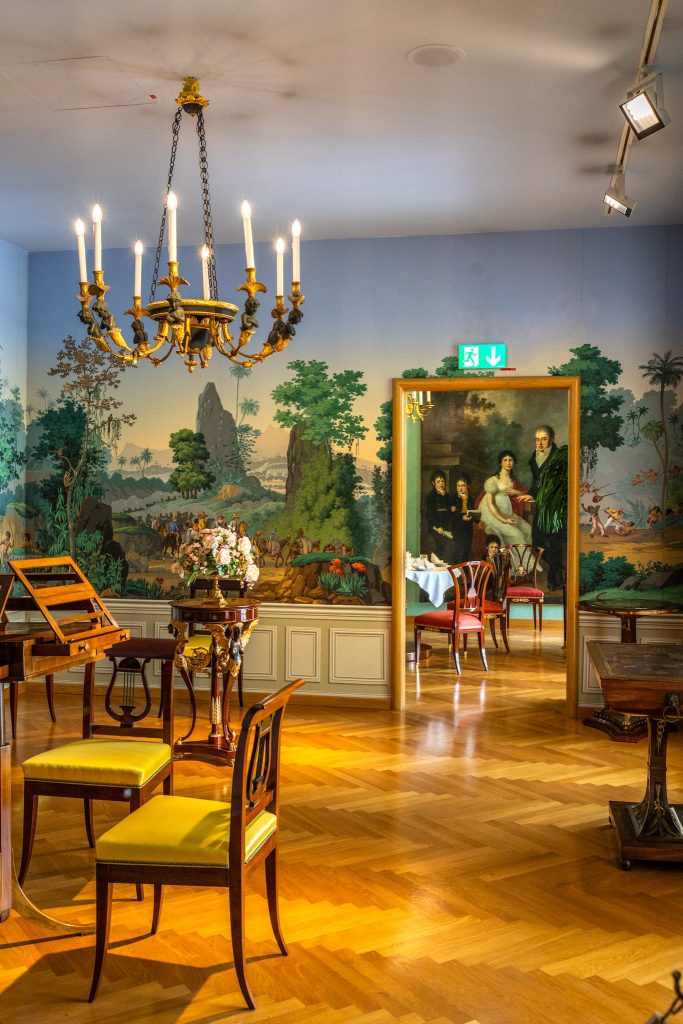
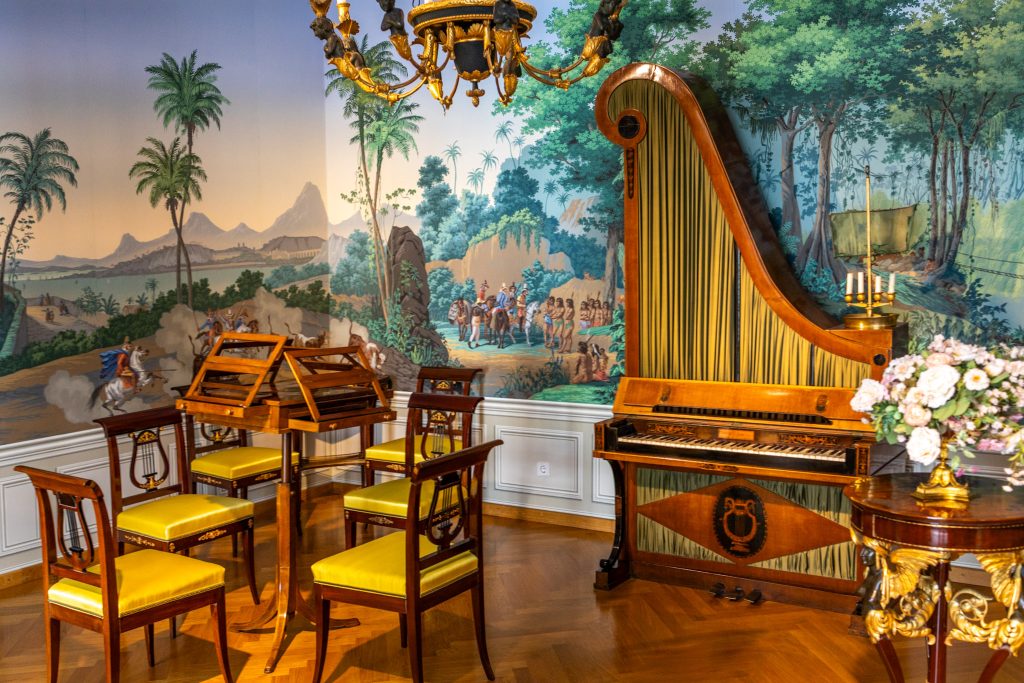
In this era, the style changes noticeably. Suddenly, it becomes colorful with bright carpets and wallpaper. I especially liked the seating and vibrant wallpaper in the Empire Hall and the Music Room is simply stunning.
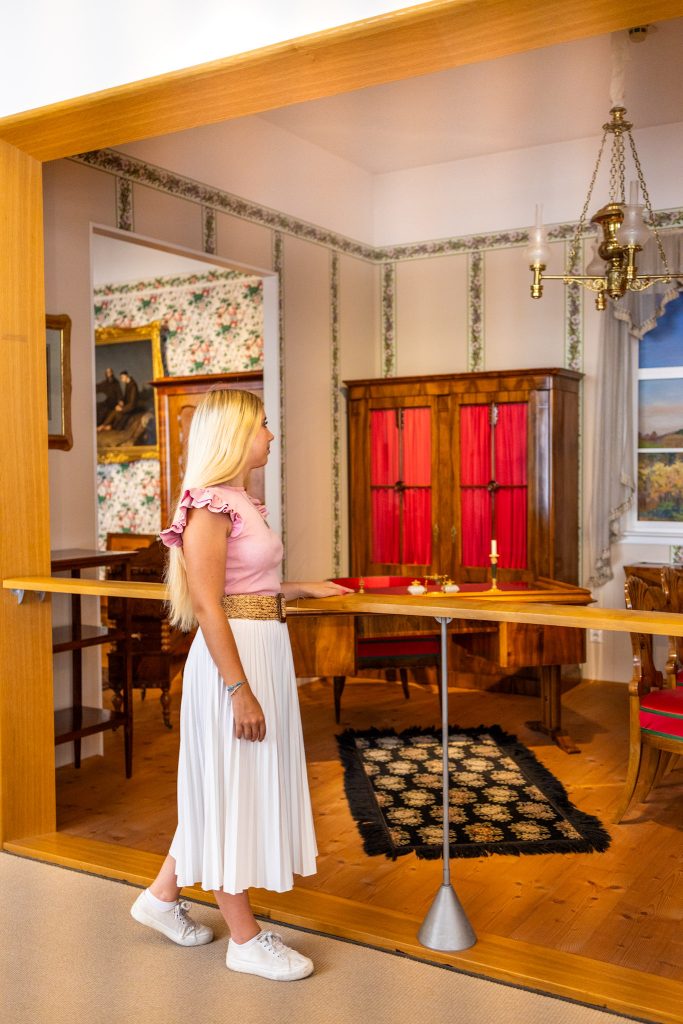
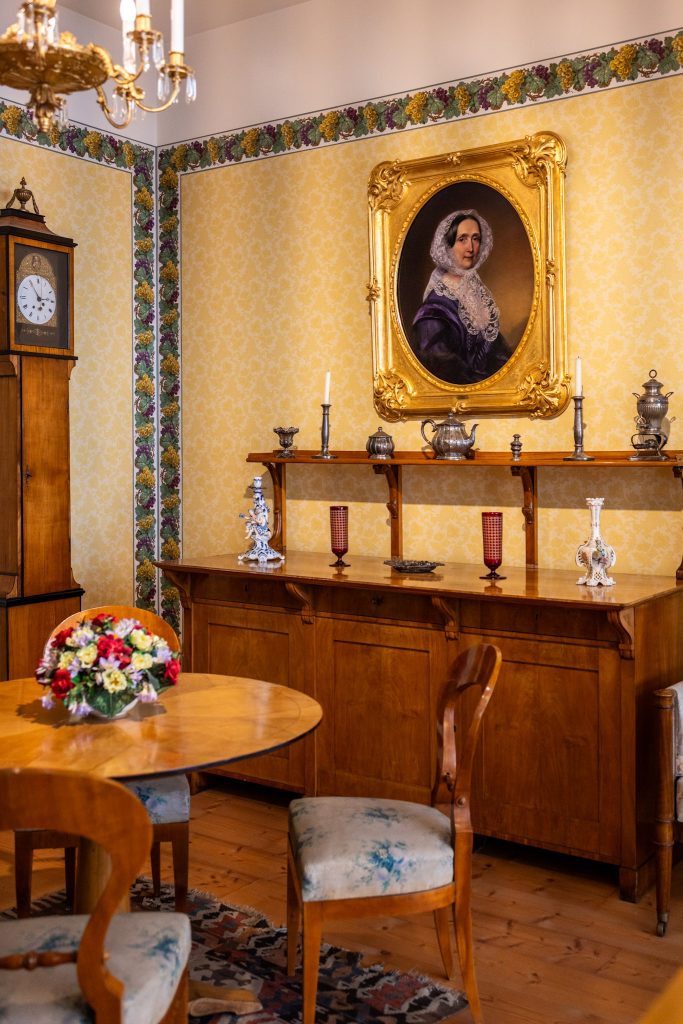
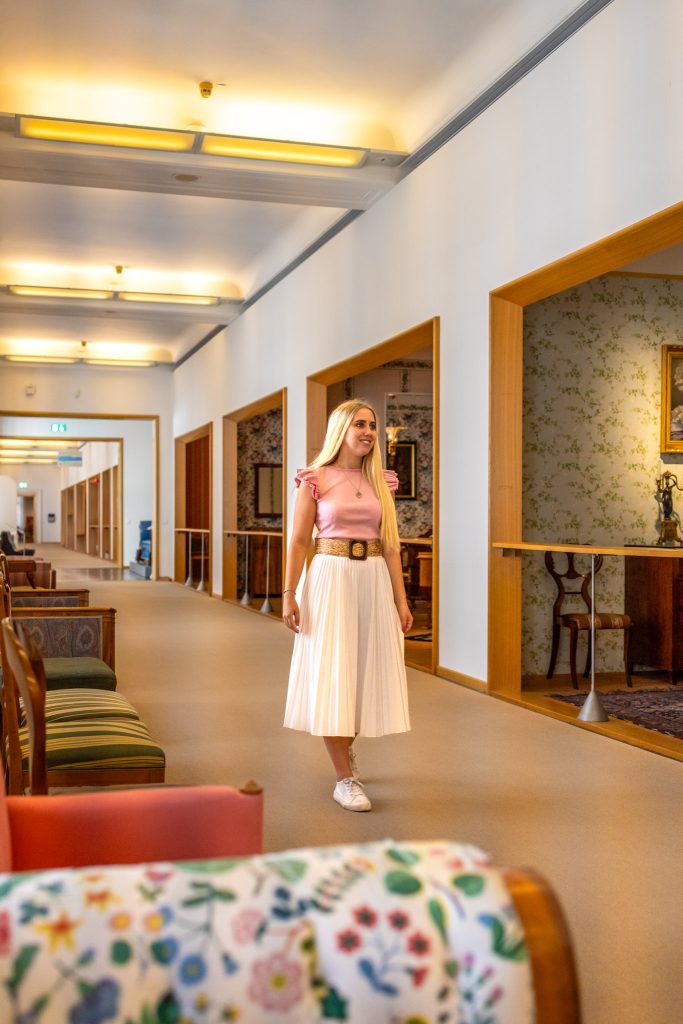
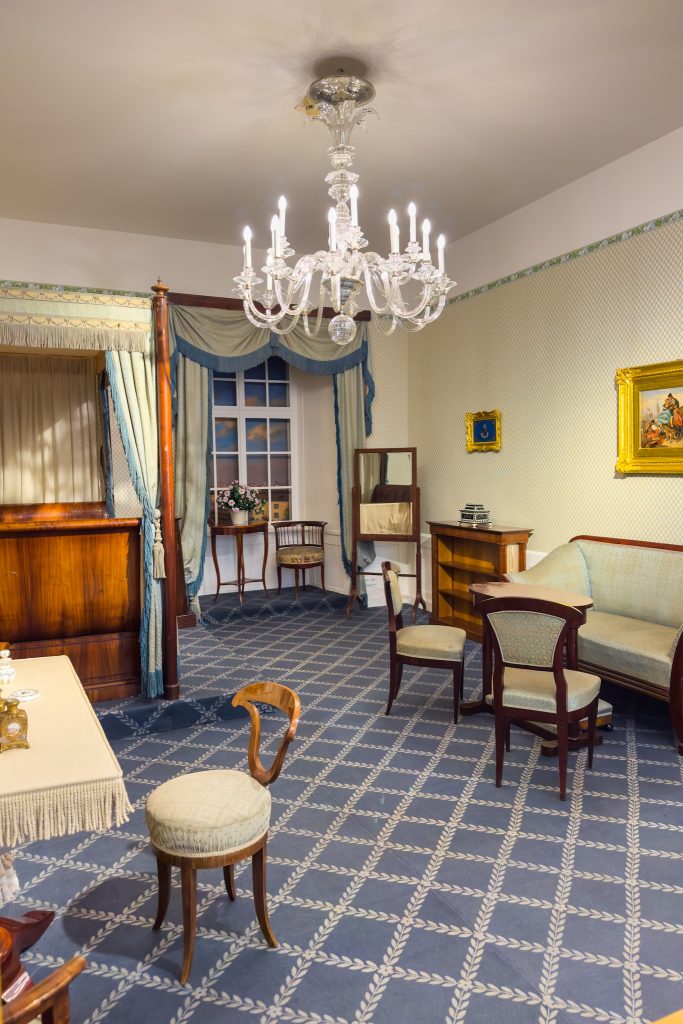
A particularly special part of the museum are the so-called Biedermeier “cabinets“. They feel like little time capsules, recreating typical interiors of that period. You immediately get a sense of how people lived back then. The Furniture Museum Vienna actually owns one of the most comprehensive Biedermeier collections in the world.
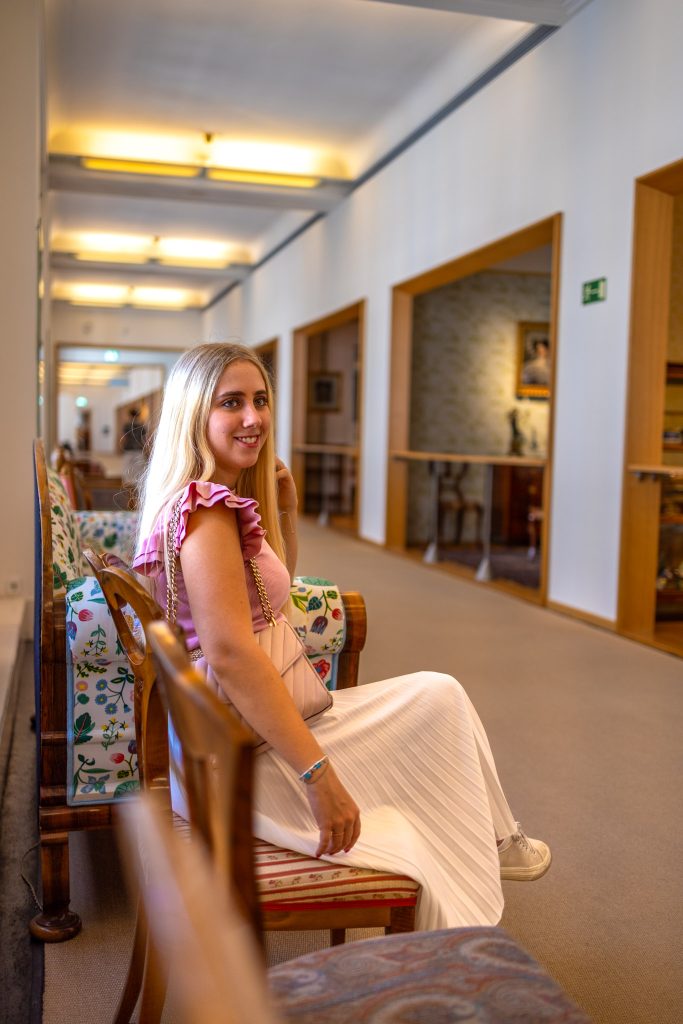
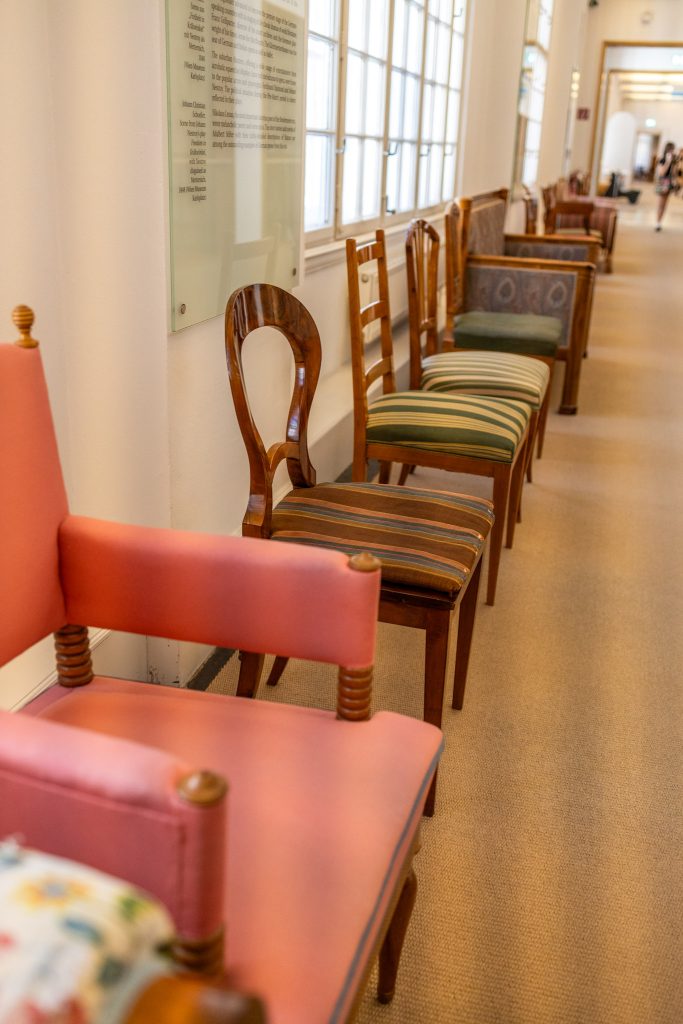
Tip: Here you can even try sitting on original Biedermeier furniture, so don’t miss the chance to take a seat!
Historicism
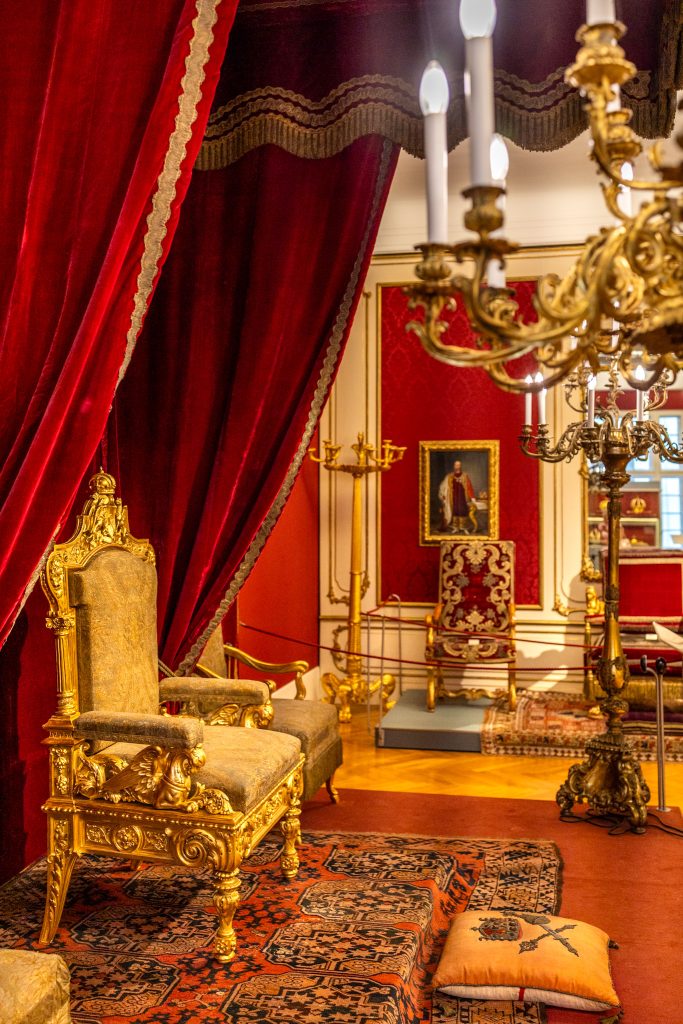
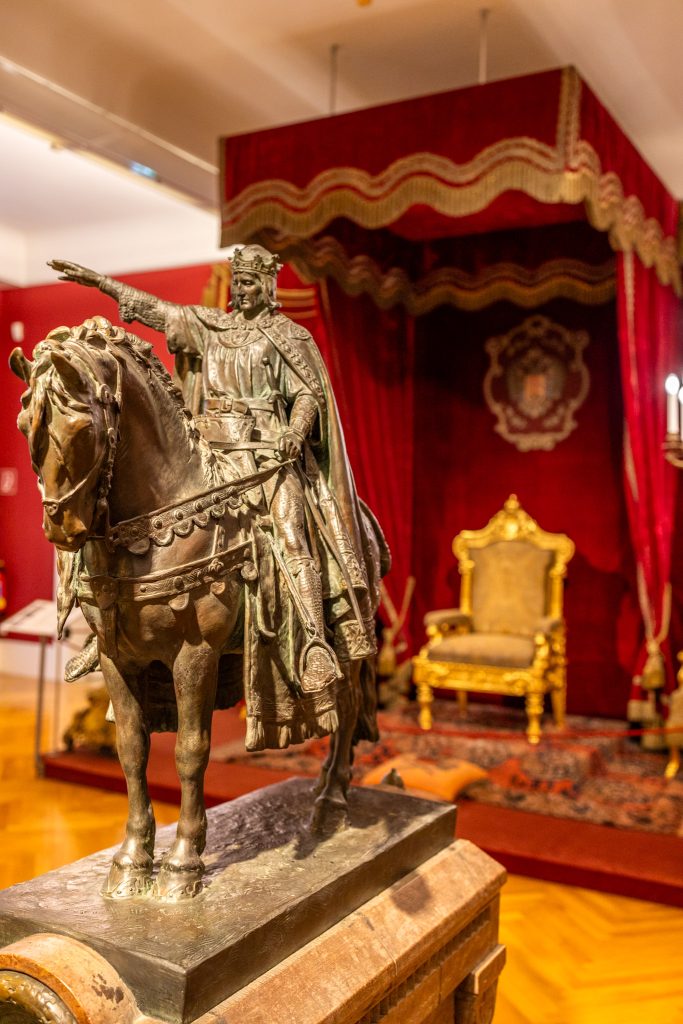
The period of Historicism, the era of Vienna’s Ringstraße, strongly drew on earlier stylistic epochs and you can see that clearly in the furniture: heavy, ornate, rich in gold, beautiful wood and columns.
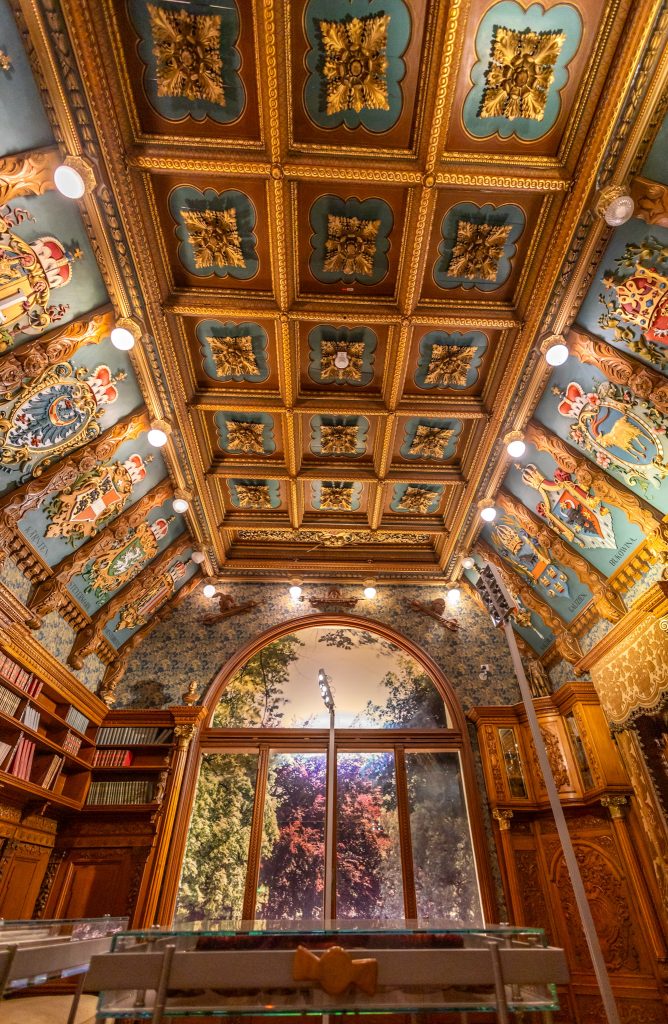
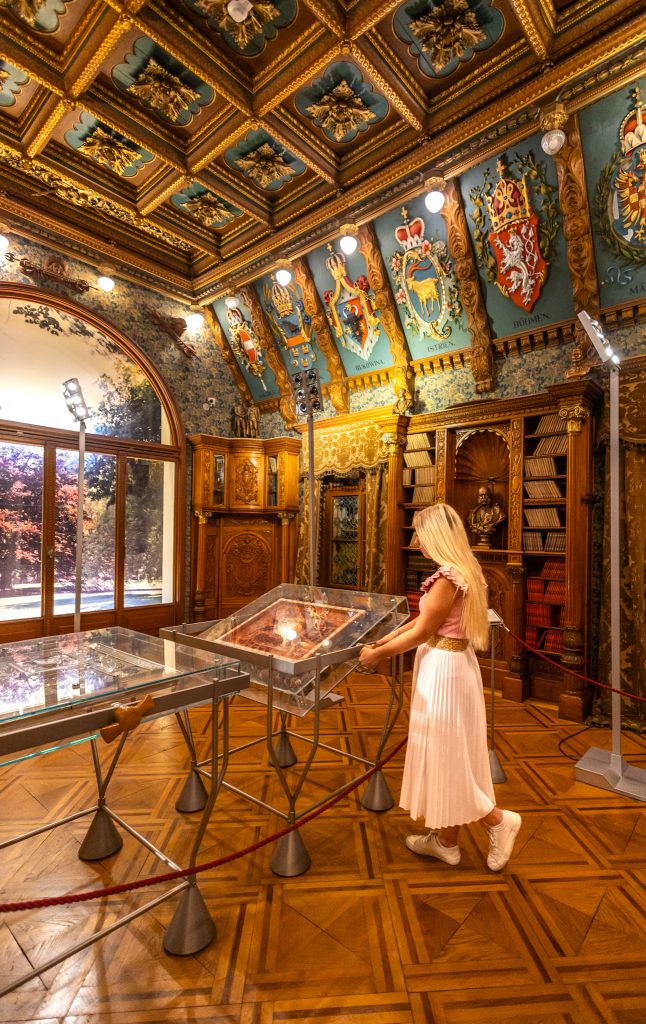
Especially impressive is the “Armorial Hall”, actually a library, richly decorated and very imposing. You’ll find it after the “growing collection” on the second floor, down the stairs to the left.
Viennese Modernism
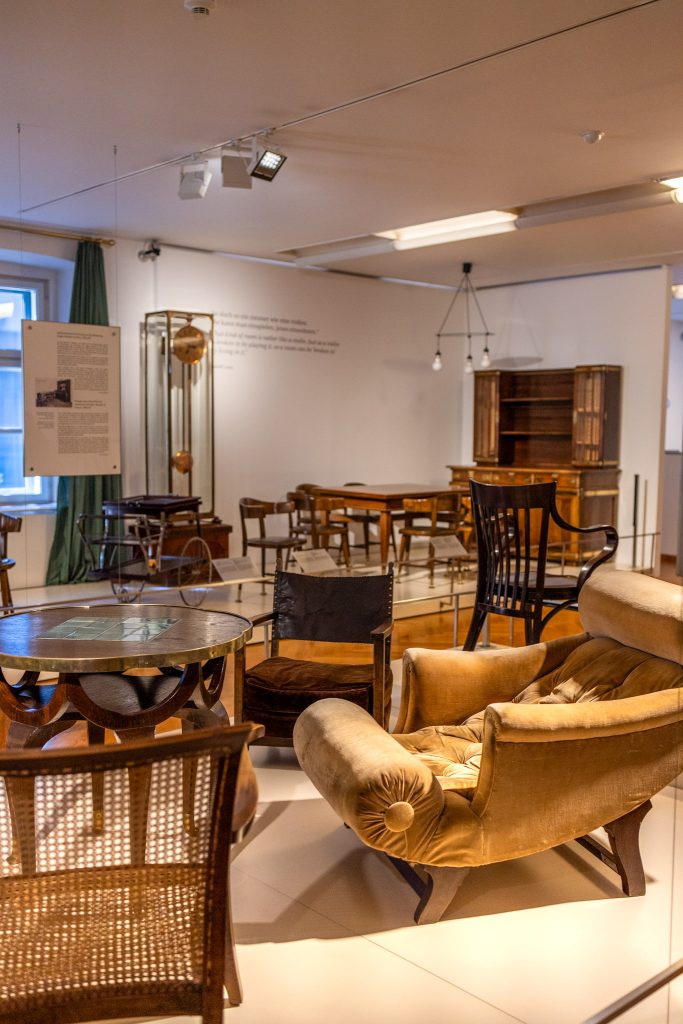
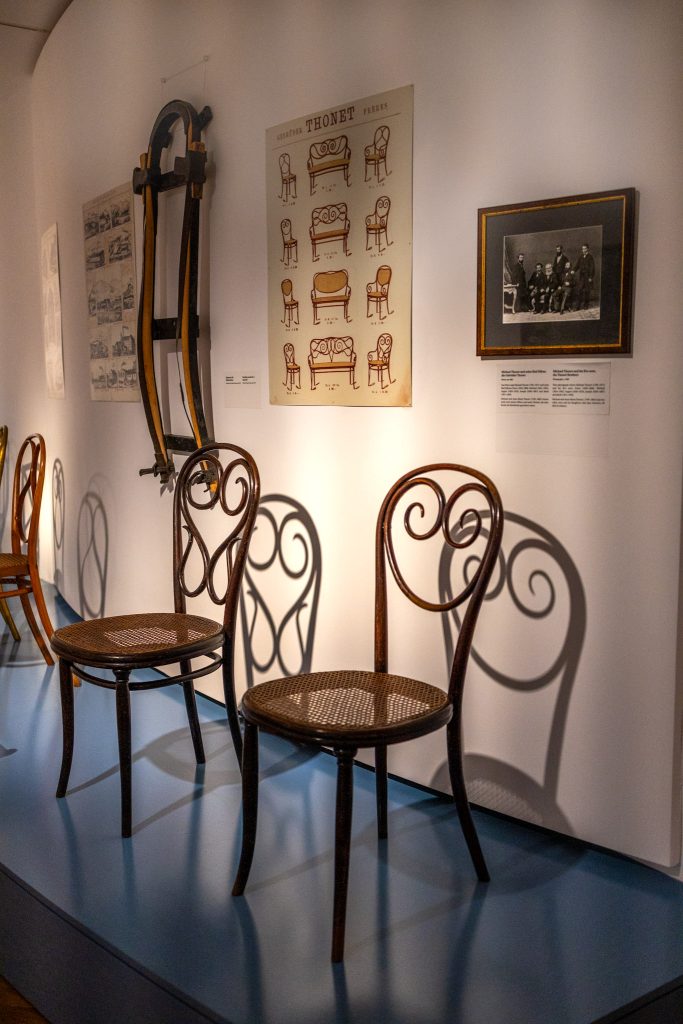
Isn’t it fascinating how much furniture design changed from one epoch to the next? In this section you’ll see Otto Wagner’s famous pieces for the Postal Savings Bank, as well as the iconic Thonet chairs and works by Josef Hoffmann and Adolf Loos.
20th and 21st Century
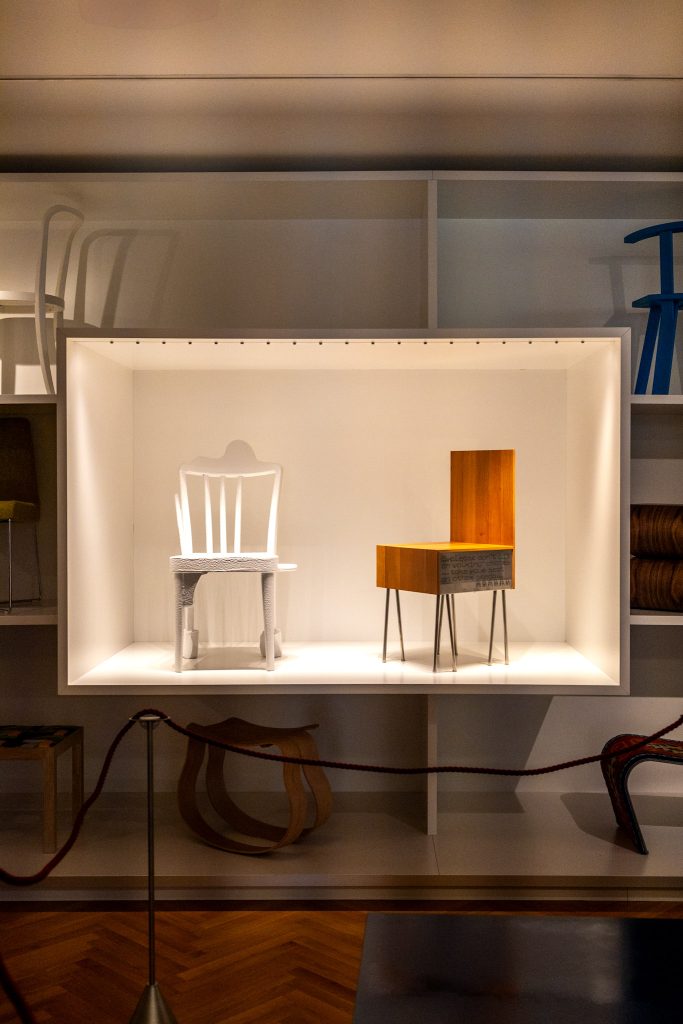
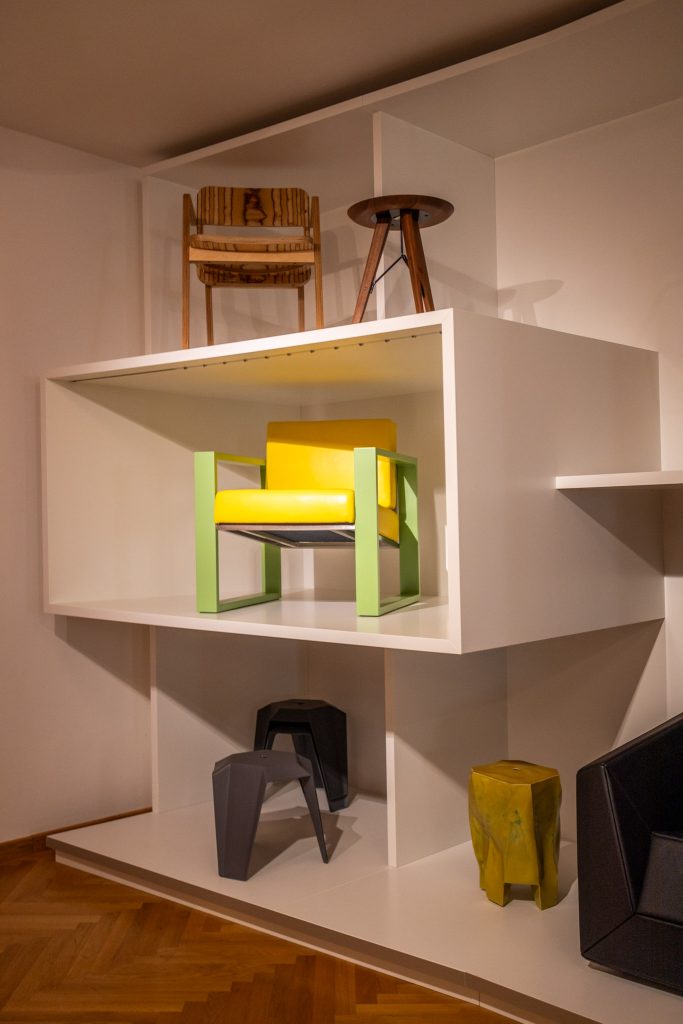
The “growing collection” includes contemporary furniture design after 2000, for example the “Walking Chair.” I found the way these were presented really cool and creative.
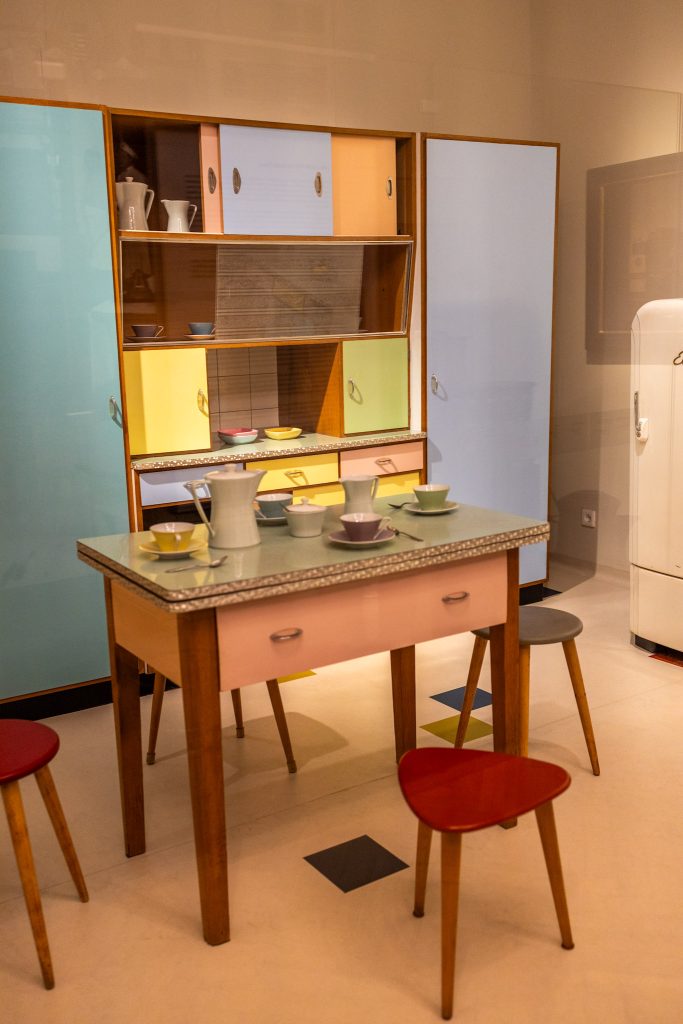
There’s also a nostalgic side: a fitted kitchen from the 1950s, and the colorful Lilien porcelain that I even remember from my great-grandmother.
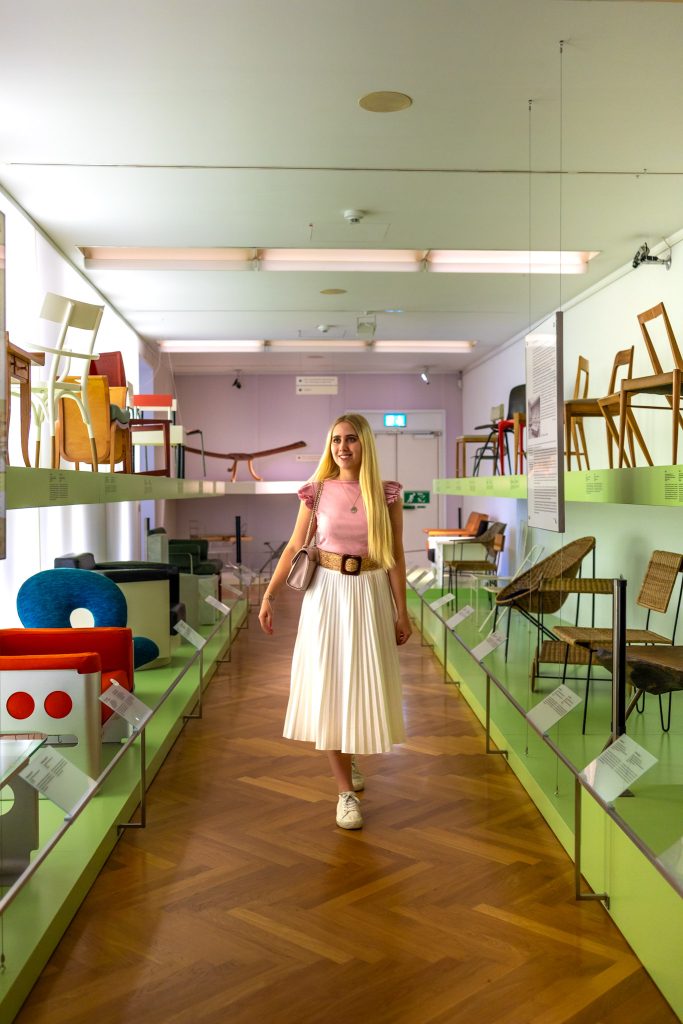
Another highlight is the apartment of ceramic artist Lucie Rie. She took her entire interior with her when she emigrated and later everything was returned to Vienna and the museum.
Sissi in Film
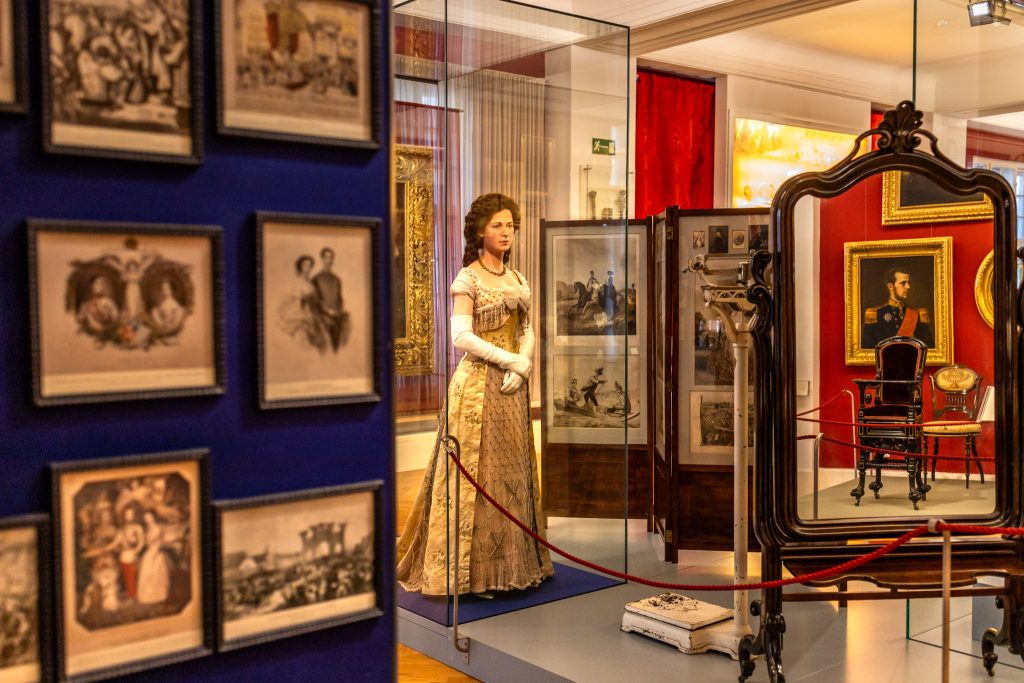
Another absolute highlight for me: the museum shows many objects related to Empress Elisabeth. Alongside dresses, photographs and memorabilia, you’ll also find original pieces of her furniture.
What’s truly unique: the famous “Sissi” films with Romy Schneider are also presented here through furniture, photos, and posters. The reason is fascinating: filming at the original locations wasn’t allowed at the time, so the sets were recreated in studios and furnished with authentic Habsburg furniture from the Hofmobiliendepot.
Up until the 1970s, historical furniture was loaned out for theater and film productions, though this practice was eventually stopped, as too many pieces were damaged or lost.
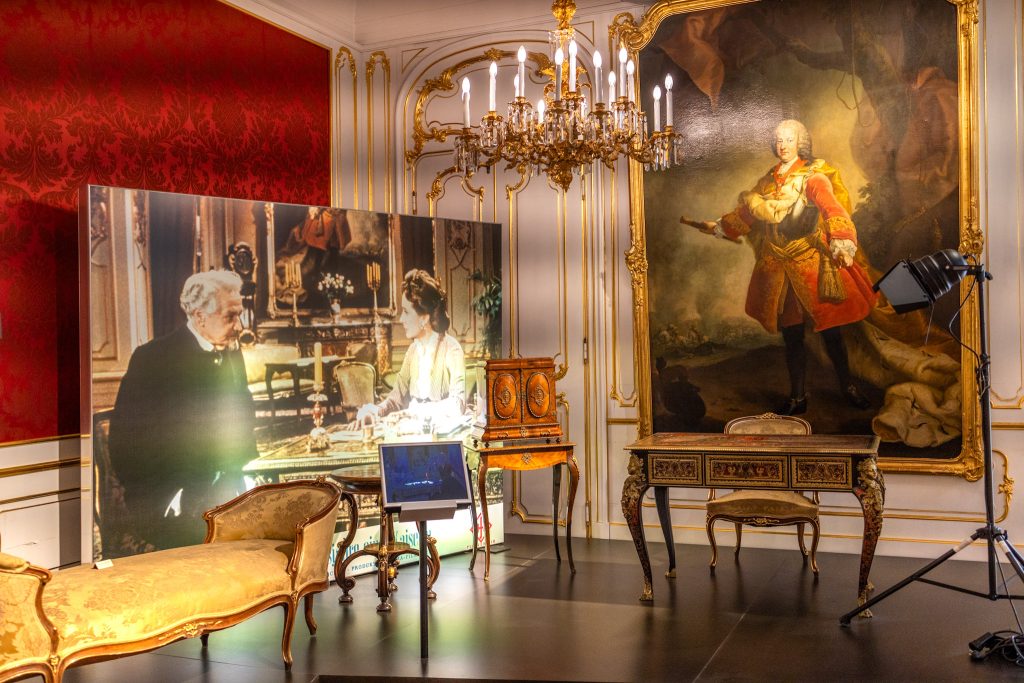
The museum also shows short film clips so you can see exactly how the furniture appeared on screen. And here’s a fun fact: while director Ernst Marischka cared deeply about lavish sets, historical accuracy mattered little to him. For example, chandeliers from Vienna’s Hofburg suddenly appeared in a Milanese salon, and Archduchess Sophie’s desk was placed in Elisabeth’s girlhood bedroom. (From the audio guide “Sis(s)i Tour.”)
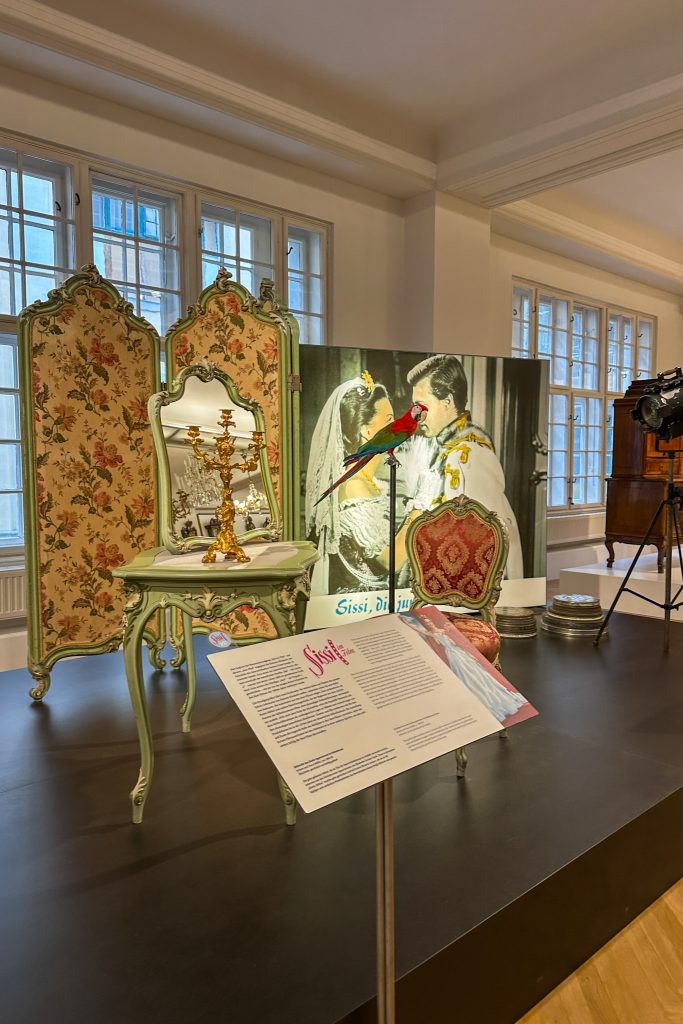
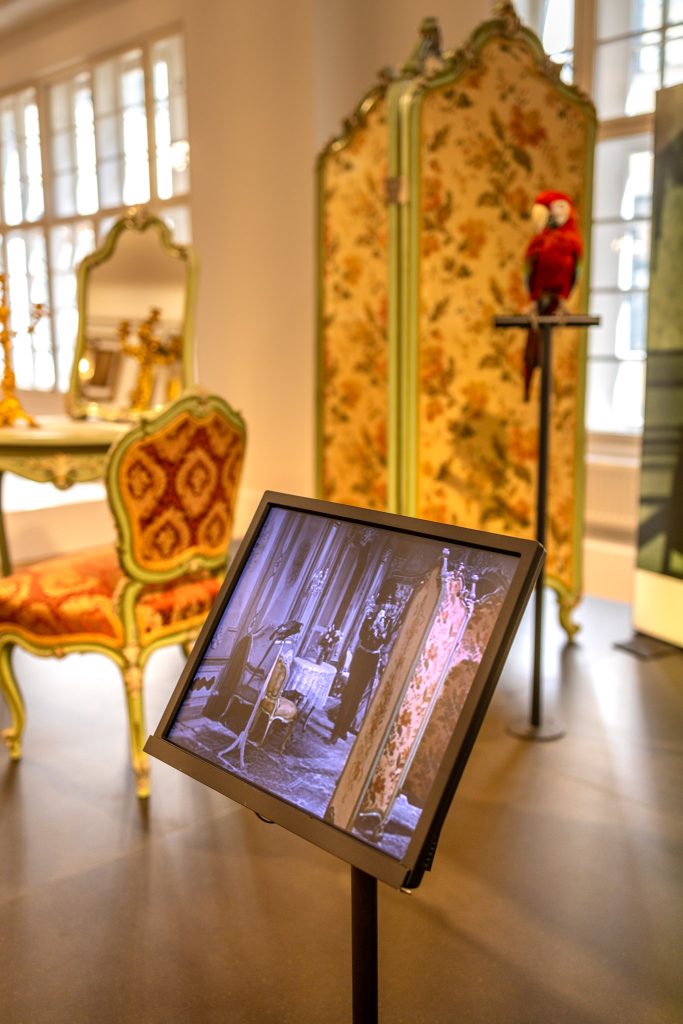
Tip: There’s even a special guided tour dedicated to “Sissi in Film”, comparing the historical empress with her movie character, using the very pieces of furniture that were featured in the films (only in German).
Themed Tours
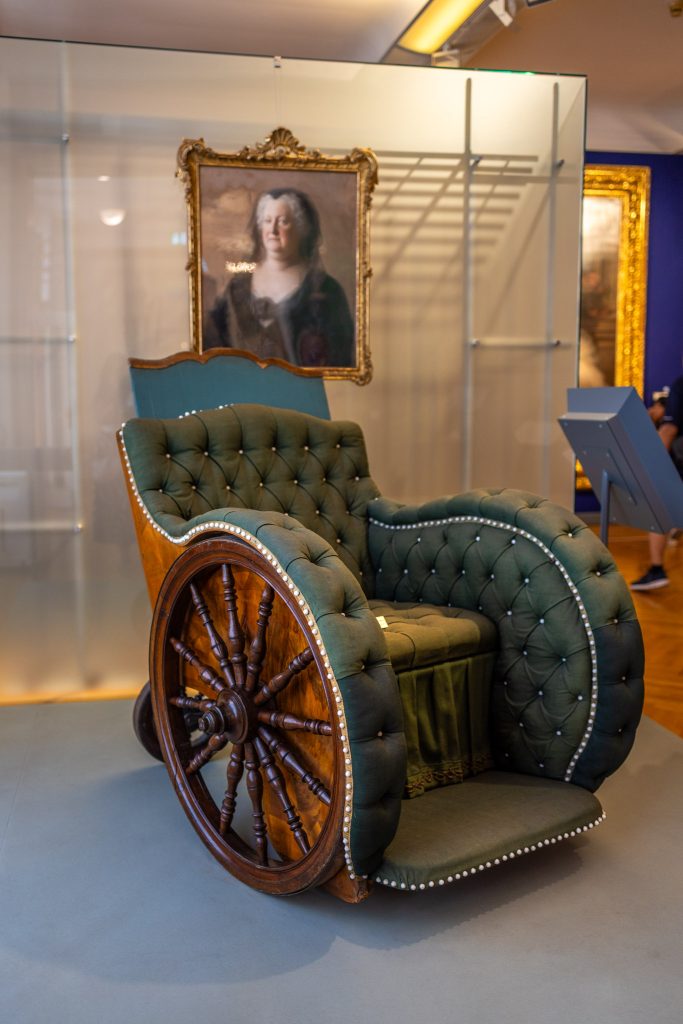
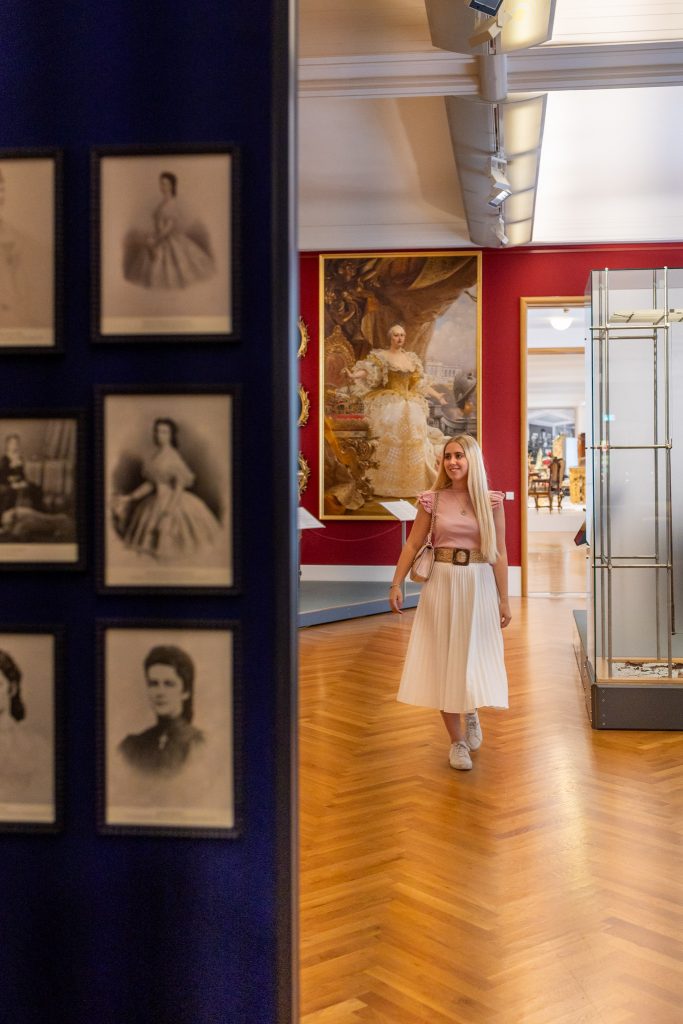
I discovered my love for guided tours at Schloss Hof, and the Furniture Museum also offers fascinating themed tours throughout the year. Please note, that these tours are only held in German, tours in English are available on request.
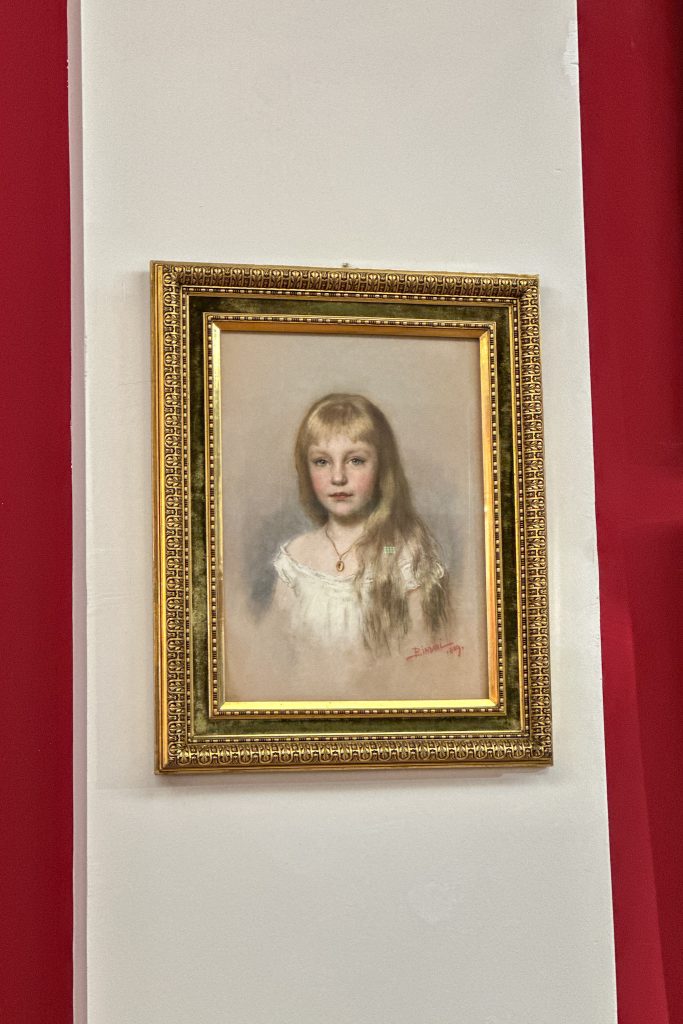
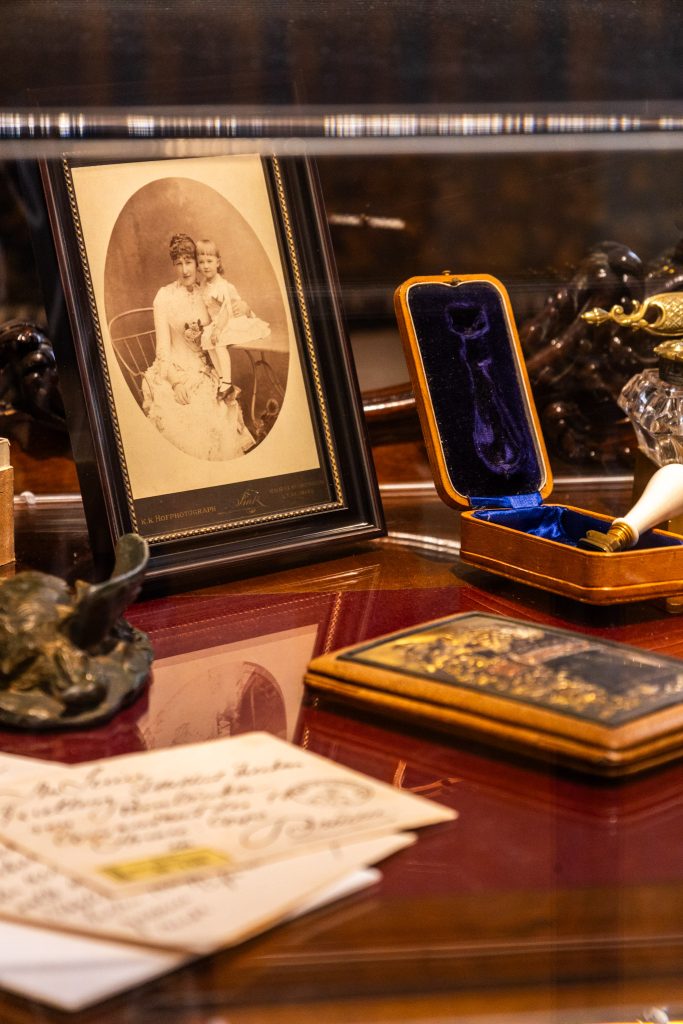
I joined the tour “How the Habsburg Women Lived” and found it incredibly interesting to dive into the lives of different women of the Habsburg dynasty: their private lives as well as their public roles, their relationships with their children and of course, their furniture. We learned about Maria Theresa, Elisabeth Petznek (daughter of Crown Prince Rudolf), his wife Stephanie and I was especially fascinated to see Archduchess Sophie in a new light, beyond the cliché of the “evil mother-in-law.” Through the furniture, I discovered so many new aspects, and that’s exactly what makes these tours so special for me.
Other themed tours include (all of them only in German)
- Rokoko Rocks
- Overview Tour of the Museum
- Sissi in Film
- Viennese Modernism
and more.
Tip: Once a month you can join the tour “The Emperor’s Couch” and get an exclusive behind-the-scenes look at the Federal Furniture Administration (Bundesmobilienverwaltung) including access to depots normally closed to the public. Here you’ll see furniture still used for state visits. Only in German!
TICKETS:
Adults: 23 €, Children (6 – 18 years): 16 €, reduced: 21 € – each including museum admission
DATES:
Every 1st, 2nd and 3rd Sunday of the month at 11 a.m.: Tours on different topics
Every 2nd Friday of the month at 2 p.m.: Tour “The Emperor’s Couch”
LANGUAGE:
German
English on request
BOOKING:
Here you can get your tickets and find all information and available dates for booking.
Special Exhibition
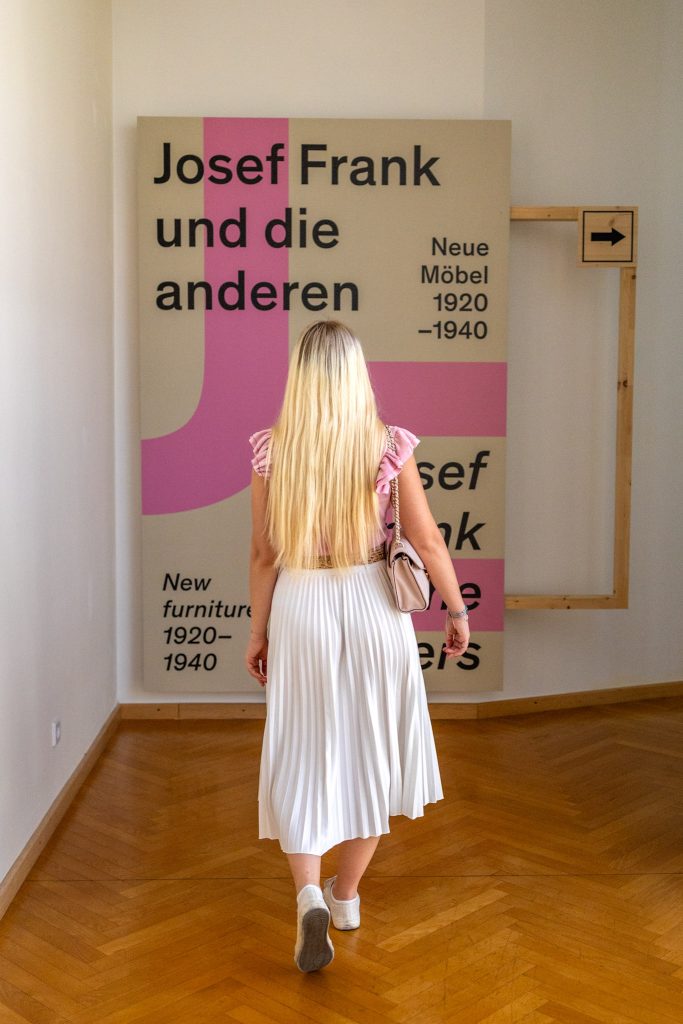
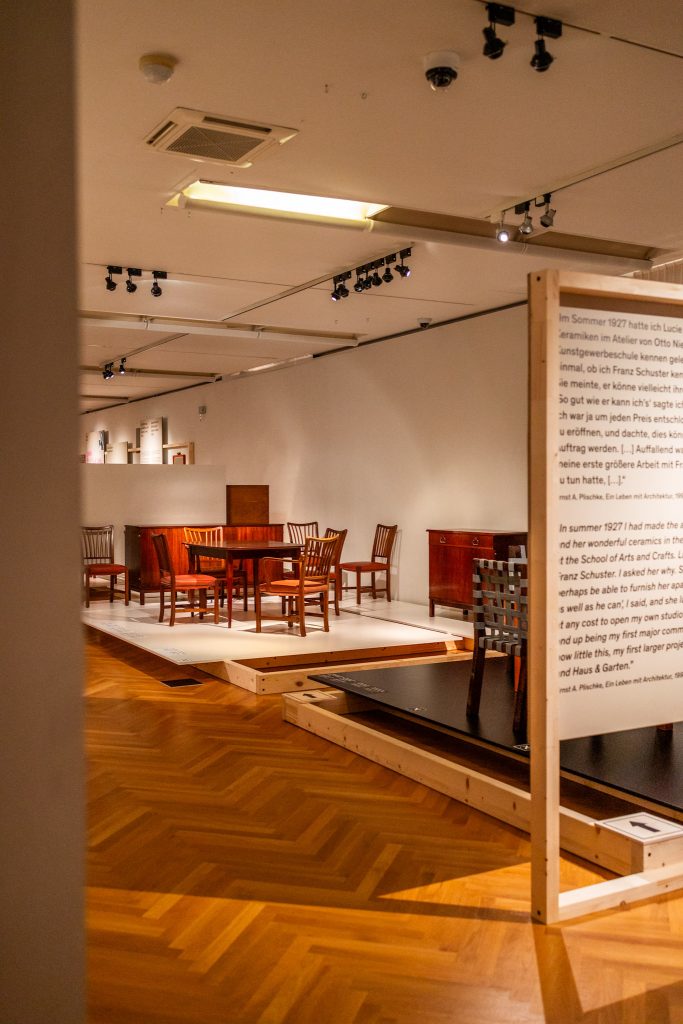
In addition to the permanent exhibition, there are always changing special exhibitions. The current one is Josef Frank and the others. New Furniture 1920 – 1940.
This exhibition is dedicated to furniture design in the interwar period and features a complete apartment interior by Josef Frank, who shaped this era significantly, as well as furniture by other Austrian architects of the time.
DATES:
The exhibition runs until January 11, 2026
TICKETS:
included in the museum admission
SPECIAL GUIDED TOUR:
every 3rd Sunday of the month and on public holidays at 3 pm, until December 26, 2025
23 € (including museum admission)
Everything you need to know for your visit to the Furniture Museum Vienna
OPENING HOURS
- Tuesday to Sunday and public holidays: 10 am – 5 pm
- Closed on Mondays
Special Exhibition “Josef Frank and the others”
- until January 11, 2026
- included in admission
TICKETS (as of September 2025)
Day Ticket Vienna Furniture Museum
- Adults: 18 €
- Children and youth (6 – 18 years): 11 €
- Children under 6: free
- Concession: 16 € (students 19 – 25, seniors 60+, people with disabilities)
Included: museum admission, audio guide, special exhibition
Tip: Buy your tickets online in advance and go straight to the entrance with your mobile ticket!
Annual Pass
- Price: 39 €
- available at the museum counter
Valid for one year from the date of issue. Includes admission to the Furniture Museum Vienna during opening hours, including permanent and special exhibitions. One themed guided tour is also included.
HOW TO GET THERE
Address: Andreasgasse 7, 1070 Vienna
By public transport:
- U3 subway: station Zieglergasse (exit Andreasgasse)
- Bus 13A: station Mariahilferstraße/Neubaugasse
By car:
- Access via Mariahilfer Straße is only possible coming from Neubaugürtel.
- There is a parking garage in Andreasgasse (€ 3.70/h, € 2.90/h with Bmove).